Stair workouts require no equipment, and provide an opportunity to stretch tight muscles, strengthen weak muscles, and get a terrific heart-healthy workout. Just find either outdoor or indoor stairs, and you’re ready to start training.
Stair Climbing Cardio Exercise. Eitherwalk, or jog up and down a flight of stairs. Stair Climbing also strengthens your hamstrings, quadriceps, and backside.
Stair Relaxation. After working out, lie down on a step, close your eyes and take a rest.
Hip Flexor Stretch
Push-Ups
Stair Climbing
Quadriceps Stretch
Tricep Dips
Relaxation
Inner Thigh Stretch
Lunge Leg Strength
Hip Stretch
Hamstring Stretch
Calf Stretch
Inner Hip Stretch
Irene Pastore is a native New Yorker, health and fitness blogger, and personal trainer. Irene owns this website, and writes all the blog posts. For her complete bio, visit the About Page.
Arnold Schwarzenegger once said, that push-ups don’t cost you a dime. He meant, that you can exercise without equipment, or a gym.
You can strengthen, stretch, and improve heart health, and core strength, without leaving your home. You don’t even need alot of space.
You can get a total body workout, and that includes your core muscles, without any equipment.
Down Plank
Don’t Let Excuses Stop You From Exercising
No money to join a gym? No problem. Use any room in your apartment, home, or outdoor location.
No place to store equipment? Not a problem. You’re going to use the weight of your own body to get you strong and fit.
Not enough room in your home? No worries. You can get big results, in a small space.
Here’s your list of exercises that use the weight of your own body, instead of equipment. This style of exercise is called Bodyweight Training.
Side Plank
BODYWEIGHT TRAINING EXERCISES
PLANKS are a highly versatile exercise. You can do them down, up and sideways.
DOWN PLANK is performed facing downward on all fours.
SIDE PLANKS are performed on one hand and the edges of your feet.
UP PLANKSrequire strength and control to do them well, because they are a very challenging exercise.
Side Plank
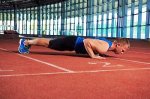
PUSH-UPS are a challenging exercise. But that doesn’t mean you should avoid them.
The full Push-Up exercise is performed on the floor, and requires a great deal of strength, and body control, to do them well.
Push-Up
MODIFIED PUSH-UP is alot easier than the full push-up, because it’s performed on your knees. Great for beginners.
WALL PUSH-AWAY is a very good alternative for anyone who cannot do the Modified Push-Up. It’s the easiest option for most people.
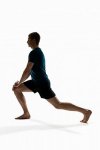
STATIONARY LUNGES are performed standing in one place.
MOVING LUNGES are performed by stepping forward, or stepping forward and back.
Lunge
SIDE LUNGES are performed by stepping sideways while stationery, or moving.
TWISTING LUNGES are performed by twisting side-to-side, while in a stationary position, or moving forward.
BRIDGES are a versatile exercise performed while lying on your back.
MOVING BRIDGE is performed by sliding one leg forward and back, while holding the Bridge exercise.
ONE LEG BRIDGE is performed by lifting one leg up to 90 degrees while holding the Bridge exercise.
Single Leg Bridge
SQUATS are performed by bending the knees. Primarily, they strengthen the legs.
WALL SQUATS are a modified version of the full squat, and are not as difficult, because you’re leaning against a wall for support.
Abdominals
ABDOMINAL exercises should be included in your exercise routine because they help support your spine. Weak abdominal and back muscles contribute to back pain, and poor posture.
Back Exercise
BACK exercises are performed lying on your stomach while lifting your torso. Include back exercises in your routine, along with abdominal exercises.
Irene Pastore is a native New Yorker, health and fitness blogger, and personal trainer. Irene owns this website, and writes all the blog posts. For her complete bio, visit the About Page.
The pelvic tilt is an easy core exercise that stretches low back muscles. The exercise can be performed seated, standing, or lying on your back.
When Should You Do The Pelvic Tilt Exercise?
Pregnant women benefit from pelvic tilting because it prevents prenatal low back ache. People who experience low back pain, caused by muscular tightness, will find that pelvic tilting, along with strengthening the abs, and back, will help alleviate low back discomfort The pelvic tilt is also used by Pilates teachers, physical therapists, and personal trainers, who help their clients improve posture.
Equipment You’ll Need
Exercise Ball. If you don’t have an exercise ball, use a sturdy chair.
Benefits of the Pelvic Tilt Exercise
Stretches low back muscles.
How To Do The Seated Pelvic Tilt Exercise In 3 Steps
Sit on an exercise ball, with your knees at right angles. Your feet should be hip width apart, and touch the floor.
Be sure you feel stable before beginning the exercise. If you can’t stabilize your body on the exercise ball, use a sturdy chair instead.
Move slowly throughout the movement, as you tilt your low back, and then sit up tall.
Pelvic Tilt Exercise On Exercise Ball
Irene Pastore is a native New Yorker, health and fitness blogger, and personal trainer. Irene owns this website, and writes all the blog posts. For her complete bio, visit the About Page.
Got an achy back? You’re not alone. Back pain is the number 2 reason for doctor visits, and one of the most common reasons for missed work.
What should you do if your back hurts all the time? First, check with your doctor to find out whether your back ache is caused by daily habits, muscular weakness, or an accident.
If your doctor tells you there is structural damage to bone, ligament, tendon or muscle, he/she may prescribe medication, and/or a treatment plan.
If your doctor discovers that the reason for your back pain is muscular weakness, or daily habits, and that participating in regular exercise will help, then you can begin doing exercise.
FOUR STEP BACK SOLUTION
1) Stretch your back with Yoga poses, or Pilates exercises.
2) Strengthen your core muscles, especially the abdominal, and back muscles. Muscles work in pairs. That’s why they should be strengthened, and stretched in equal measure.
3) Avoid sleeping on your stomach. When you sleep on your stomach, your pelvis tips forward, tightening the low back muscles. In the morning you’ll wake up with a backache. Instead, sleep on your side, or on your back.
While you sleep on your back, place a pillow under your knees to help stretch your back muscles. While sleeping on your side, place a pillow between your knees to ease your low back.
4) Practice the pelvic tilting exercise. This exercise stretches your low back muscles. Pelvic tilting can be done while standing against a wall, lying on your back, or seated on a chair, or on an exercise ball.
Irene Pastore is a native New Yorker, health and fitness blogger, and personal trainer. Irene owns this website, and writes all the blog posts. For her complete bio, visit the About Page.
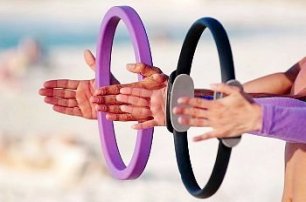
The Magic Ring is a portable piece of core exercise equipment invented by Joseph Pilates, the creator of the Pilates method of exercise. Here are 10 important reasons that the Magic Ring used by Pilates practitioners, and anyone who wants a quick and easy way to get strong.
Take it with you on vacation.
Take it to a friend’s house, and practice together.
The ring is very light, and will fit in a suitcase, or carry bag.
The ring is easy to use. Just squeeze and release while holding the handles.
The ring builds arm, hip, thigh, abs, and back muscles.
The results are powerful.
The ring is affordable. Prices range from $15.00 and up to around $49.00.
Rings come in 3 resistance levels: light for beginners, medium for intermediate workouts, and strong for an advanced workout.
The ring can be combined with both large and small Pilates equipment, to create more challenging workouts.
The ring is versatile. Use it in standing, seated, side lying, prone, and supine exercises.
Irene Pastore is a native New Yorker, health and fitness blogger, and personal trainer. Irene owns this website, and writes all the blog posts. For her complete bio, visit the About Page.
The core is a powerhouse of important muscles that help you carry out everyday activities, with more efficiency, and less injury.
A strong core enhances sports performance, prevents athletic injuries, gives you good posture, and makes your back strong so that you’ll never have problems with debilitating backaches. A strong core keeps older people from falling, and equestrians squarely on their horse. The core is located within your torso.
Think of your core like a sturdy tree trunk, immovable and very solid, able to withstand outside forces. Strong trees have powerful resistance against winds, torrential rain, and snow storms. And in a way, you’re just like a sturdy tree when you develop the muscles of your core.
In basic terms your core is made up of your abdominal, back, hip and backside muscles.Working together they give you the upper hand at life’s chores, and activities. All movement travels through your core, the center of your body. A sturdy core keeps you from getting injured, gives you superior posture, and enhances the way the look, feel and breath.


 Irene Pastore is a native New Yorker, health and fitness blogger, and personal trainer. Irene owns this website, and writes all the blog posts. For her complete bio, visit the About Page.




 prenatal low back ache. People who experience low back pain, caused by muscular tightness, will find that pelvic tilting, along with strengthening the abs, and back, will help alleviate low back discomfort The pelvic tilt is also used by Pilates teachers, physical therapists, and personal trainers, who help their clients improve posture.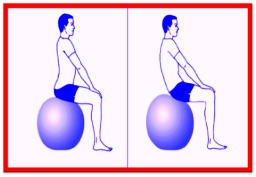
 Got an achy back? You’re not alone. Back pain is the number 2 reason for doctor visits, and one of the most common reasons for missed work.
 muscular weakness, or daily habits, and that participating in regular exercise will help, then you can begin doing exercise.
 While you sleep on your back, place a pillow under your knees to help stretch your back muscles. While sleeping on your side, place a pillow between your knees to ease your low back.
 Pilates, the creator of the Pilates method of exercise. Here are 10 important reasons that the Magic Ring used by Pilates practitioners, and anyone who wants a quick and easy way to get strong.


 Irene Pastore Fitness.com