Your spine is shaped like the letter S, forming four normal curves. The low back portion curves inward. As your uterus grows bigger, the inward curve becomes more pronounced, causing more strain on your low back.
One of the most common complaints during pregnancy is low back pain.
Classical Pilates exercises are performed while lying on your back, abdomen, or side. Prone positions are uncomfortable for pregnant women, and back lying shouldn’t be done after the fourth month. Side and standing Pilates are safer alternatives.
THE STANDING PELVIC TILT
The Standing Pelvic Tilt is an excellent Pilates exercise to help relieve low back pain. It’s easy and safe, for most pregnant women.
Stand with your back, shoulders and head against a wall.
Bend knees slightly, arms at your sides.
Slowly press lower back against the wall. Hold for 10 to 20 seconds. Do 8 to 10 rounds.
The Standing Pelvic Tilt can be done throughout the day to stretch low back muscles.
Copyright 2013 Irene Pastore, and Blue Moon Personal Training
Figure skating is a demanding, aesthetic sport that requires concentration, agility, power, core strength, flexibility, and balance. Each of these attributes are the essence of the Pilates method of exercise.
Core strength stabilizes, coördinates, and balances the entire body during figure skating.
Upright Pilates exercises performed while standing on an unstable surface, mimics the skaters position, and experience while on ice.
Off ice creative use of core strengthening equipment during standing Pilates, simulates the skating experience in the rink.
Gliders, sliders and even towels replicate the ice, while developing the skater’s core muscles, challenging their balance, and improving flexibility.
Dynamic power begins with the the core. The outer muscles may be strong, but those smaller muscles that support the spine and pelvis come into play during skating. Balancing on one foot, Jumps, spins, spirals require supreme strength in the core.
Copyright 2013 Irene Pastore and Blue Moon Personal Training
Pilates is an exercise method created by Joseph Pilates during the 1920s. Pilates taught his students to develop strength in the center of the body. He called this center, the powerhouse.
Once the powerhouse is strong, muscles are balanced, movement becomes efficient, our postures improve, aches and pains disappear.
Climbing is an exhilarating sport where flexibility helps you reach further, while muscular strength gives you the ability to manoeuver through tough spots.
The margin for error is narrow. Taking a fall may cause injury, or loss of life. No one wants either. Strengthening your core with Pilates makes you a dynamo of balanced power.
If you’re thinking about taking up climbing, or are already involved, why not be sure your body is fully prepared for the challenges ahead.
Pilates gives you the upper edge on becoming a successful climber, rather than a quitter or someone who is frequently injured.
The skills you need for climbing are inherent in Pilates: concentration, breathing, focus, control, precision, flow and stamina.
Designed to create mobility and strength, the Pilates method of exercise, teaches mind over muscles, to be as supple as a cat, not to sacrifice knowledge to speed, breathing through all movement, and concentrating on correct form.
Copyright 2013 Irene Pastore and Blue Moon Personal Training
MOVE FROM THE TORSO In order to execute movement from the torso, and not the arms, kayakers, and people who engage in rowing sports, need a strong core. Fatigue in the back, shoulders, and neck occur, when core muscles are weak. Unless the core is strengthened, injuries are likely to occur in the shoulders. PILATES MAT TORSO EXERCISES FOR KAYAKERS Upper torso exercises that strengthen the oblique abdominal muscles.
Obliques Roll Back
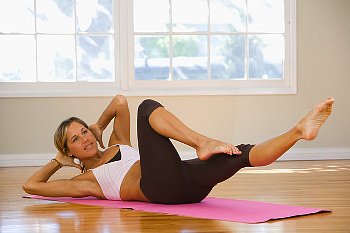
Criss Cross Obliques
Saw
Spine Turn
Upper torso exercises that strengthen the abdominal muscles, and oblique abdominals.
The Hundred
Roll Up
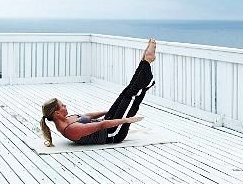
Teaser
Upper torso exercises that strengthen the back, hamstrings, and gluteals.
Swimming
Double Leg Kick
Copyright 2013 Irene Pastore and Blue Moon Personal Training
The Pilates Hundred exercise might be too difficult for beginners.
You’ve tried a group class, and couldn’t do the exercises. Your neck hurt, and you couldn’t keep your head off the mat. Your hamstrings are so tight that you couldn’t straighten your legs. You were out of breath. Everything hurt. You couldn’t wait for the class to end.
If you had an experience like this, the class you took was much too difficult. Maybe it was the only one offered at your gym, and you decided to try it. But now, your never going back. No wonder you quit.
How To Enjoy Learning Pilates
There’s a better way to begin Pilates. Here are a few suggestions.
Find a Pilates studio, or gym that offers basic classes. Call the studio, describe your needs. Find out whether they teach your fitness level.
Find a Pilates trainer who has a studio, or will visit your home for private instruction.
Purchase a beginner level DVD. Amazon.com is a good place to start because of their large inventory.
Purchase a Pilates book that illustrates exercise modifications.
Find on online membership-based Pilates studio that offers basic classes.
When you take classes, be sure to listen carefully to instructions.
Don’t overdo it.
When To Hire A Pilates Trainer
Group exercise isn’t for everyone, especially if you’ve been injured, have special needs, or you’ve been sedentary.
The Pilates Spine Supporter is used to modify The Hundred exercise.
A qualified trainer will save you time and money by teaching you correct alignment, and how to modify exercises that are too difficult. They will take you step-by-step through each exercise according to your ability, and help you avoid injury.
A trainer will demonstrate the use of specialized Pilates equipment, such as the Spine Supporter, and the Pilates band.
The band helps you develop stronger abdominals and neck muscles during the supine Roll-Up, without straining yourself.
The Spine Supporter develops abdominal strength, and reduces tension in your neck during the Double Leg Stretch exercise.
At some point, you might be ready to join a group class. So, don’t give up. If you stay with it, you’ll succeed.
Copyright 2013 Irene Pastore and Blue Moon Personal Training
Muscles work in opposite pairs. Ideally both pairs should be equal in strength and flexibility.
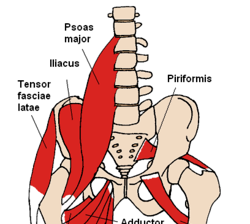
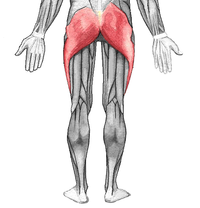
A pair of muscles has opposite functions. The iliopsoas and gluteals are opposing muscles.
The iliacus and psoas are two muscles that comprise the iliopsoas, a hip flexor, and low back stabilizer.
The iliopsoas brings your hips forward, while the gluteals bring your hips backward.
To get an idea how these muscles work together, stand up and swing one leg forward and back without bending your knee.
If your iliopsoas becomes excessively tight, your gluteals become lengthened, and can’t do their job. The imbalance affects the positioning of your pelvis, and the lower portion of your spine.
Pelvic Stabilization Improves Your Posture
When the iliopsoas and gluteals are working properly, they help to stabilize the pelvis and keep it in a neutral position. That means, your spine is balanced and healthy. Poor posture develops when the spine is not in neutral.
Why the Iliopsoas Muscle Becomes Tight
Gluteal Muscles
Long hours of sitting at the computer, in a car, or watching television.
Sleeping in the fetal position (legs drawn up toward chest).
Cycling.
Running.
Neglecting to stretch.
What Happens When Muscles Become Imbalanced
Low back pain
Neck pain
Sports injuries
Poor sports performance
Restricted range of motion
Poor Posture such as swayback (flattening of the lower back), hyperlordosis, (excessive arch in lower back), flatback (natural low back curve is flat), and kyphosis (excessive arch in upper spine).
When the iliopsoas overpowers the gluteals, the pelvis is tilted forward increasing the arch in the low back.
Returning Muscle Balance With Pilates
Human posture is considered healthy when the pelvis is in a neutral position, not tipped forward or back. From the side, the spine has three gentle curves (cervical/neck, thoracic/upperback, and lumbar/low back). When viewed from the back, the spinal column appears like a straight line. A healthy spine is pain-free.
Pilates exercises are specific to correcting muscle imbalance, by returning the spine to its normal position.
Pilates exercises are performed while maintaining the spine in neutral position.
Participants who have difficulty holding the spine in neutral, are given modified exercises to help correct muscle imbalance.
Special Pilates props and equipment are used, when participants experience difficulty performing the exercises.
Copyright 2013 Irene Pastore and Blue Moon Personal Training

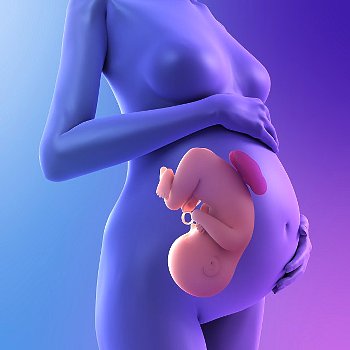 portion curves inward. As your uterus grows bigger, the inward curve becomes more pronounced, causing more strain on your low back.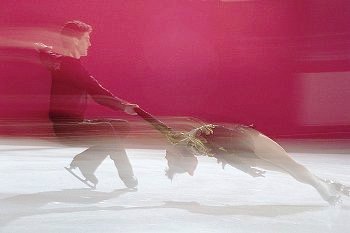



 Irene Pastore Fitness.com