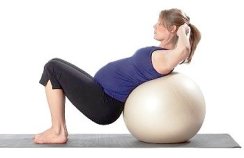
Why Is Prenatal Core Strength Important?
1. Prevents and eases back ache.
2. Strengthens muscles for labor and delivery.
3. Promotes faster postnatal recovery.
4. Improves posture.
What and Where Is Your Core?

Your core is located on your torso. These are the muscles that make up the core.
- Abdominals
- Back
- Hips
- Buttocks.
A very important deep abdominal core muscle is the Transversus Abdominus (TVA).
During labor the TVA is the muscle that pushes your baby from the uterus through the birth canal. Unless your physician has told you otherwide, TVA strengthening exercises should be included in your prenatal exercise routine. The stronger the TVA, the more effective a pregnant woman can push out her baby.
Core Muscles Support Your Back
 Common complaints during pregnancy are low back pain, and sciatica. Exercising the core muscles that support your spine, eases the discomforts caused by weakness in the back and abdominal muscles.
Pregnant woman can and should exercise their abdominal muscles. Exercise routines vary according to trimester, ability, and the advice of your doctor.
Prenatal Mat and Reformer Pilates
Pilates focuses on core strength. Women who regularly practice Pilates may continue through pregnancy, as long as they modify the exercises according to trimester, and have their doctor’s permission.
If you’re thinking of continuing your Pilates routine during your pregnancy, first get your doctor’s advice, and then find a Pilates teacher who can safely guide you through prenatal Pilates Mat, or prenatal Reformer exercises.
How Do You Know Which Exercises To Do?
Take the guesswork of prenatal exercise by joining a facility that offers prenatal group exercise classes, , hire a certified personal trainer, Yoga or Pilates instructor. A trainer will design exercise routines for each trimester of your pregnancy, so that you get the best and safest workout experience.
Typical Prenatal Core Exercises
- Down Planks
- Side Planks
- Kegels
- Pelvic Tilts
- Step-Ups
- Back Exercises with Tubes and Bands
- Abdominal V-Sits on BOSU Balance Trainer
- Prenatal Pilates
- Prenatal Yoga
- Prenatal Push-Ups
- Modified Prenatal Abdominals
 Irene Pastore is a native New Yorker, health and fitness blogger, and personal trainer. Irene owns this website, and writes all the blog posts. For her complete bio, visit the About Page.
Copyright 2016 Irene Pastore, and TourDeCore.com.


 magazines, or taught in group classes, may not be appropriate for everyone.
 exercise routines. Follow these tips, and play it safe while exercising during your pregnancy.
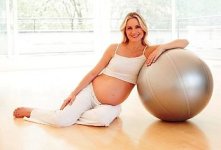 aerobics, stretching, strengthening, and relaxation. Here is a quick list of 7 prenatal exercise benefits
 Irene Pastore Fitness.com