Aging Well Starts On The Floor: The Mobility Test That Predicts Longevity


What Is Floor Mobility?

Floor mobility is an essential skill for healthy aging. It is the ability to get up from the floor without assistance. Research shows that this ability is linked to longer life and better overall health.*

Why Floor Mobility Matters

  • It’s a powerful health predictor.
  • It keeps you independent.
  • It’s a sign of physical decline or strength.
  • It’s easier to maintain than regain.

Why It Works As A Predictor

The ability to sit and rise without assistance reflects a combination of the following.

  • Muscle strength
  • Joint mobility
  • Balance and coordination
  • Neuromuscular integration
  • Flexibility and core control

All of these functions are critical to daily function. They tend to decline with age if not actively maintained.

Quick At-Home Test

Use a padded floor or exercise mat. You can do this wearing sneakers or barefoot.

  1. Sit down on the floor without using your hands or leaning on anything.
  2. Now try to stand back up, without using your hands, knees, or nearby furniture.
  3. Subtract one point for each hand, arm, or knee used for support.
  4. Maximum score is 10.

If you don’t have the strength to attempt the mobility test, begin an exercise program as outlined below. Always check with your physician beforehand.

Tips To Improve Floor Mobility

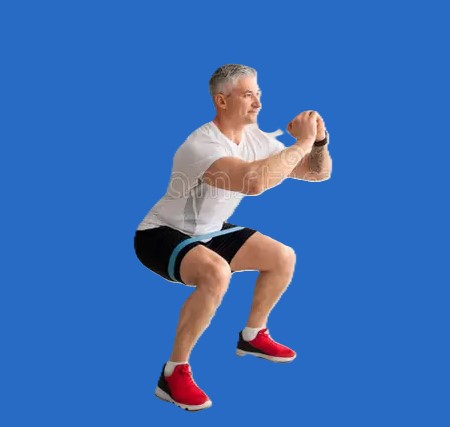
  • Practice squats without equipment.
  • Strengthen your core and glutes with planks, bridges, and step-ups.
  • Improve balance with single-leg exercises.
  • Practice Yoga balance poses or Tai Chi .

*Study Title: Ability to sit and rise from the floor as a predictor of all-cause mortality
Published: December 2012
Journal: European Journal of Preventive Cardiology
Lead Author: Dr. Claudio Gil Araújo (Brazilian researcher and sports medicine specialist)

What Does Being Elderly Really Mean?


When do you officially become elderly? There are a variety of opinions . In the United States, someone is considered elderly when they turn 65. The Social Security Administration states that persons over 65 are legally considered senior citizens.

When your hair turns silver, does that make you elderly? Medical professionals may describe a fragile, incapacitated patient of 80 or older as elderly.

What if you decide to never retire, or what if a 65+ year-old is very fit. Are people like this considered elderly? There is really no standard answer.

The word elderly is often associated with frailty, poor balance, and deterioration to the point where someone may not be capable of self-care. They’ve become dependent on others to assist them with the activities of daily living.

The concept of old age is changing. Searching the web, you’ll find videos about older adults participating in sports, lifting weights, and extending their professional careers well past 65, many of whom advise against retirement.

Older adults who exercise regularly, avoid smoking, and eat healthy, slow down their aging process. They are in better shape than their counterparts who don’t practice good health habits.

I think a good way to define elderly is frailty. Someone can be frail at 65 or at 85. It depends, and it’s relative to lifestyle and genetics. The saying ‘age is just a number’ is close to the truth.

If you’re not exercising, get busy. Exercise will help decelerate unwanted signs that you’re getting older.


Get in touch with me when you’re ready to start.

How To Do A Dumbbell Bulgarian Split Squat

  • Stand with feet hip width apart. Hips point forward.
  • Lift lift one leg onto bench as shown in video.
  • Maintain neutral spine.
  • Grab the dumbbells and place them at your sides. Brace the core.
  • Place most of your weight on the supporting leg.
  • Drop the knee down until it is 1-2 inches off the ground maintaining a slight forward torso angle.
  • At the bottom of the movement the knee angle on supporting leg is positioned slightly behind the toes.
  • Repeat for desired number of repetitions.
  • Change sides and repeat exercise. Maintain good posture throughout.
  • Repeat for the desired number of repetitions on opposite leg.
MODIFICATIONS: 1) Place one or two hands on a wall for support. 2) Perform the exercise without equipment.
TECHNIQUE: 1) Avoid lifting the heel on the supporting foot. 2) The knee on the supporting leg should not collapse inward while lowering. 3) For good balance, the foot on the bench should lie flat. 4) Adjust the height of the bench so that it’s in line with your knee. 5) Avoid rocking back. 6) Keep knee slightly behind toes. 7) Standing too far away from the bench will cause loss of balance. 8) To avoid loss of balance, have someone hand you the dumbbells, or place them on a nearby bench.

How To Do A Single Leg Hammer Curl

The Single Leg Hammer Curl Develops Core, Bicep and Forearm Strength


  • Hold a dumbbell in each hand. Feet shoulder width.
  • Stand on left foot.
  • Raise right foot a few inches off floor.
  • Slowly raise and lower dumbbells.
  • Perform desired repetitions.
  • Switch to standing on right foot.
  • Repeat desired repetitions while standing on right foot.
  • Stand upright with good posture throughout the exercise.

Modifications: 1) Use lighter dumbbells. 2) Perform fewer repetitions.

Technique: The goal is hip and shoulder stabilization while moving the weights. Modify the exercise, if your body sways or you lose your balance. Avoid arching your back or bringing head and shoulders forward.


How To Strengthen Glutes From A Standing Balanced Position

A Basic Glute Strength Core Stabilization Exercise For Home or Outdoors


All You Need Is Elastic Tubing

  • Attach one end of the tube handle to a secure hook.
  • Walk away from the point of origin. The further away you are from the hook, the greater the resistance.
  • Place the other tube handle around left foot.
  • Place hands on hips or waist.
  • Stand on right foot.
  • Slowly bend left knee, while raising the left foot off floor.
  • Slowly return left foot to floor.
  • Repeat on same foot for desired repetitions.
  • Switch to standing on the left foot and repeat desired repetitions.

Modifications: 1) Use a lighter tube for decreased resistance. 2) Stand closer to the point of origin. 3) Perform the exercise without the tube. 4) Perform fewer repetitions. 5) Raise foot at a lower angle.

Technique: The exercise becomes more difficult, with a heavier tube, or standing further back from the point of origin. The goal is shoulder and hip stability throughout the exercise. If you have difficulty with stability, modify the exercise.