Yoga Improves Senior Balance

THE TREE POSE

There are many types of Yoga poses: standing, seated, twists, balancing, lying on your back, abdomen or side.

Balancing poses may be done while standing, seated, or on your hands.

Yoga can strengthen overall, and deep core muscles that are important for maintaining good balance.

If you’re over 55 and would like to learn a beginner level standing balancing pose, consider the Tree Pose a good choice.  The pose can be modified to suit individual ability.

HOW TO DO TREE POSE

Set up the pose as shown in the photograph above.

Stand on your right foot for 10 to 30 seconds.  Repeat on your left foot.

If you’ve never balanced on one foot, it might be difficult at first.  Just keep practicing, and don’t overdo it.

It’s traditional to do Yoga barefoot.  However, if you feel more comfortable wearing shoes, that’s fine, as long as the soles are non-skid.

Practice the Tree Pose on a non-slippery floor.  If you want to invest in equipment, purchase a sticky mat.  Go barefoot while using a mat. Socks can bunch up on a sticky mat, and cause you to trip.

HOW TO MODIFY TREE POSE

Use A Wall For Support

Stand facing a wall.  Place both hands on the wall for support, instead of having your hands in front of you. Hands are shoulder width apart.

Use A Lower Foot Position

Place your foot on the lower part of your leg, instead of higher up.

Copyright 2013 Irene Pastore and Blue Moon Personal Training
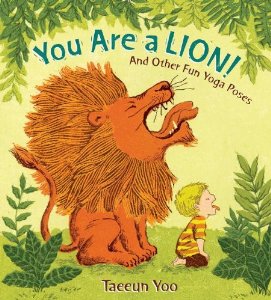
You Are A Lion! And Other Fun Yoga Poses

You Are A Lion and Other Fun Yoga Poses by Taeeun Yoo.

A sweet, Illustrated book that introduces young children to animal-inspired Yoga poses.

Along with the name of the Yoga pose, a small child is shown holding each pose.

Turning the page we see the lions, cats, frogs, dogs, and butterflies, in poses named after them.

“Sit on your knees tongue out!  You are a lion, king of the jungle, roaring so loud, make the woods rumble.”

Hardbound copies are available at Amazon, for $14.92, or borrow one from your local library.

Copyright 2013 Irene Pastore and Blue Moon Personal Training
How, When, and Why To Use Yoga Blocks

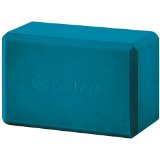
Yoga Block

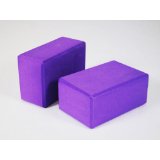
Yoga blocks are made from durable, scratch-resistant, lightweight foam, and are shaped like rectangles with rounded edges.

The blocks measure 9″ wide by 6″ high by 4″ deep, and come in multiple colors, with prices ranging from $9.00 to $12.00.

Five Reasons You Need To Use Yoga Blocks

  1. Prevents struggling, and makes your practice more enjoyable.
  2. Safely supports and modifies poses.
  3. Brings the floor closer to you.
  4. Provides stability, and extra height.
  5. Braces your weight, and keeps you balanced.

Who Benefits From Using Blocks?

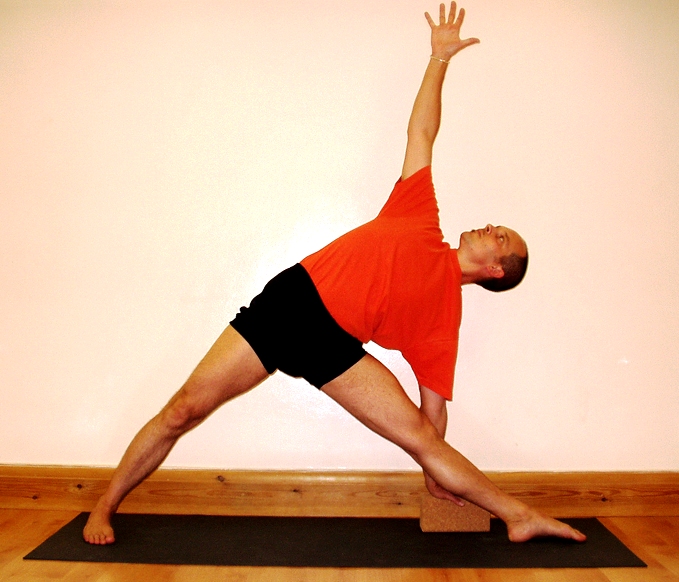
Triangle Pose with block.
  • Seniors
  • Beginners
  • Pregnant Women
  • Runners
  • Anyone with tight muscles, or injuries.

How To Use Yoga Blocks 

  • Under your hand in Trikonasa (Triangle Pose), and in Arda Chandrasana (Half Moon Pose).
  • Under your feet or low back in Setu Bandasana Sarvangasana (Bridge Pose).
  • Sitting on a block in Gomukhasana (Cow Face Pose), and Virasana (Hero Pose).
  • Under your head when there is excessive arching of your neck in supine poses, as in Ananda Balasana (Happy Baby Pose).

When To Use A Yoga Block

  • Can’t reach the mat in Uttanasana (Standing Forward Bend)?  You need a block under each hand.
  • Using your fingertips instead of the palms of your hands?  Use a block under your hand.
  • Is your front knee bending in Parivritta Trikonasana (Revolved Triangle)? Use a block under your hand.
  • Do your feet hurt in Virasana (Hero Pose)?  Sit on a block.

Where To Buy Yoga Blocks

There are many internet sites where you buy Yoga blocks. Three are listed below.  These companies also sell a full line of Yoga clothing and equipment.

Copyright 2013 Irene Pastore and Blue Moon Personal Training
Exercise of the Month: June 2013

WARRIOR TWO YOGA POSE 

Start Position
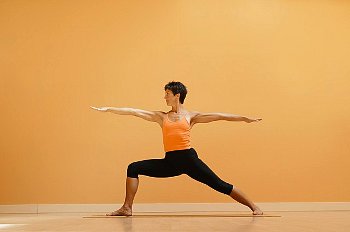
Warrior II

Sanskrit Name: Virabhadrasana

Level: Warrior II is a basic standing Yoga pose.  

Reverse Warrior is an intermediate level, standing Yoga pose.

Equipment: Yoga sticky mat.

Muscles Worked Warrior II: Strengthens shoulders, hamstrings, hip abductors, and external rotators.  Stretches quadriceps, hips (iliopsoas, and adductors).

Reverse Warrior stretches the oblique abdominals, while strengthening the legs, and opening the hips.

How to Perform the Warrior Two Yoga Pose

Turn your right foot to the right, and step your feet wide apart, as shown in the photograph of Warrior II Pose.  Your hips and shoulders form a rectangle.

Raise both arms to shoulder height keeping wrists straight. Turn your head to the right, gazing at your fingertips.

Distribute your weight evenly over both legs.  Hold 20 to 30 seconds.

Reverse Warrior Pose

Variation: Reverse Warrior (Viparita Virabhadrasana).  This is a more challenging variation of the Warrior II Pose.  

Set up is the same as Warrior II.  The difference is adding a side bend while raising the arm.  

Distribute your weight evenly over both legs. Your hand should rest gently on your leg.  

Gaze upward at your open palm.

Caution: To prevent slipping, remain centered on your mat. Avoid poses that are uncomfortable for your body.  You should be able to breath deeply without forcing the flow of your breath.

Copyright 2013 Irene Pastore and Blue Moon Personal Training
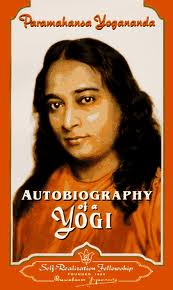
Recommended Product: Autobiography of a Yogi

Swami Yogananda
Swami Yogananda

First published in 1946, by the Self Realization Fellowship, Autobiography of a Yogi, is the life story of Paramahansa Yogananda, one of the world’s most well-known teachers of Yoga science. Since its first printing, the book has sold over 4 million copies.

Autobiography of a Yogi describes Yogananda’s spiritual journey, and his search for enlightenment.  He was born in India in 1893, and in 1915 became a monastic.  Yogananda moved to the United States in 1920, where he founded the Self-Realization Fellowship to disseminate his teachings.

Autobiography of a Yogi is an inspiration for anyone considering the spiritual path, or for those already on their way.  It will make an excellent gift for Yoga lovers.

Visit the Self Realization Fellowship website to read more about Yogananda’s teaching.  The SRF web bookstore sells his books and CDs.

Copyright 2013 Irene Pastore and Blue Moon Personal Training

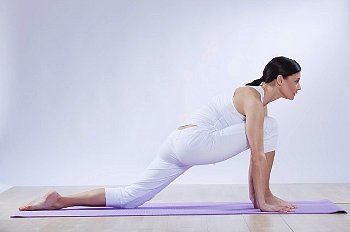
The Lunge Stretch for Tight Hips

The Lunge Stretch

This is an excellent basic stretch to help open the hips. If you practice Yoga and have difficulty with hip openers, make the Lunge Stretch part of your regular stretching routine.  This stretch targets the iliopsoas muscle.

Lunge Stretch
Lunge Stretch

How To Do the Lunge Stretch

  1. Get onto all fours.
  2. Bring your right leg forward within your ability. You may have to align your right knee directly under your right hip, unless you have more flexibility, and can bring your leg further back.
  3. Place your hands on either side of your right foot.
  4. Hold the Lunge Stretch for 15 to 20 seconds.
  5. Repeat the stretch on the left side.

How To Modify the Lunch Stretch

  • If you have difficulty reaching the mat, place a Yoga block under each hand.
  • Place a folded towel under your knee for added cushioning.
Yoga Blocks
Yoga Blocks

 Copyright 2013 Irene Pastore and Tour De Core Personal Training