Citi Bike Coming To New York City

Bike Share Docking Stations Go Up in Manhattan

Effective May 2013, a bike sharing service is coming to the Big Apple.  Citi Bike, the provider for the new program, says their bikes are rugged 3 speed cruisers, with sturdy aluminum frames, and durable tires.  
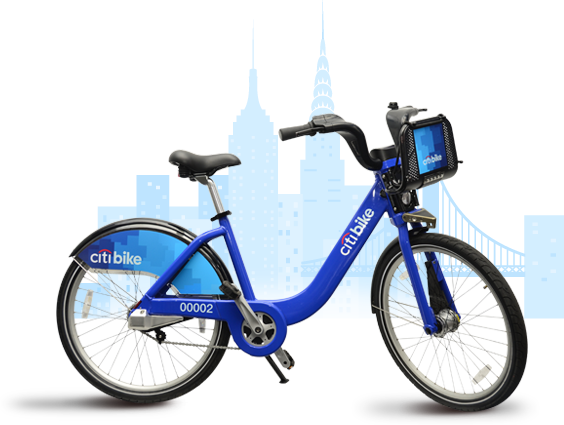
CITI BIKE
CITI BIKE

Across Manhattan bike share docking stations are being installed. 

330 docking stations will open in Brooklyn and Manhattan, to be filled with 6,000 share bicycles.

Bad News For Obese Riders 

The bikes carry a limit of 260 pounds, and anyone who exceeds that amount, cannot use the program.  ABC News reports on this story, ‘NYC Bike-Share Program Bans Obese Riders.’ and the New York Daily News, ‘Bike-Share Ban.’

Convenient and Inexpensive Transportation

Citi Bike is New York City’s next public transportation system, that will provide convenient and inexpensive mobility 24 hours per day, 365 days per year.

The DOT has built 200 bike lane miles in all five boroughs, and commuter cycling has more than doubled in New York City since 2005.

Copyright 2013 Irene Pastore and Blue Moon Personal Training
Pilates For Horseback Riders

Riding Without Saddle or Bridle

When you watch this video of Stacy Westfall riding Vaquero without saddle or bridle, you can see that the rider is very strong.

The horse is a powerful force under the rider, especially when it picks up speed and begins to run.  When the horse makes a sudden stop, the rider remains stable. How is this done without her falling to the ground? The answer is a strong core.

Pilates Principles and Horseback Riding

Pilates principles are compatible with the goals of horseback riders.

  • Control
  • Precision
  • Breath
  • Flow 
  • Centering
  • Stamina

Pilates exercise emphasizes training the body to maintain neutral spine, the healthiest position for human posture, during all types of activities.  Neutral spine is achieved by developing the muscles that support the spine.

In horseback riding, a flexible spine, strong abdominals, and the ability to hold the spine in a neutral position, gives the rider a postural advantage, making time spent with their horse more enjoyable.

Muscle balance, spinal alignment, pelvic and shoulder stability are high points in Pilates training, as well as in horseback riding.  While riding, the spine should be flexible but not hyperextended (overarched), and the shoulders even and relaxed.

Pilates cross training for riding, is further enhanced by adding equipment such as the Magic Ring, Pilates Bands, and exercise balls.  The equipment simulates the riding experience by adding resistance and release under instability.

Copyright 2013 Irene Pastore and Blue Moon Personal Training
Memorial Weekend: Avoiding Exercise Injuries

Stay fit on vacation, but don’t overdo it, especially if you’re in the 50 plus age bracket.  According US News, people with sports injuries, led by baby boomers, are now the number 2 group visiting the doctor’s office, just behind patients who come in with colds

The UNC School of Medicine reports that weekend warrior injuries occur in both men and women of all ages, but especially among formerly active 30 plus adults, who are inactive during weekdays.

The Centers For Disease Control reveals that over 10,000 Americans receive emergency room treatment for sports and recreational injuries daily.

TEN TIPS TO PLAY SAFE

Bicycling

  1. Wear athletic shoes while riding a bicycle.  Never wear flip flops, sandals, high heels, clogs, slippers, or go barefoot while riding, unless you want to have an accident.
  2. To avoid backache, use the correct size bike.
  3. The type of bike you ride should be compatible with your journey. Don’t ride a racing bike, when you really need a mountain bike.
  4. If you’re core muscles are weak, the chances are good you’ll experience low back pain during or after your ride.  Begin to strengthen your core before your vacation.

Running

  1. Wear proper footwear.  Replace worn out treads before you leave on vacation.
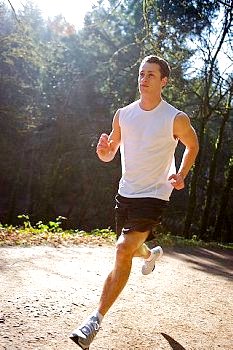
  2. Don’t  over train (running too many miles, for too long).
  3. Don’t run on concrete. Grass or dirt trails are better shock absorbers.
  4. Stretch after your run. Keeping your muscles supple helps to avoid injury.
  5. Muscle imbalance can cause running injuries. Before your vacation, get a postural assessment through a local chiropractor, or fitness professional to determine whether you have muscle imbalance.
  6. To improve overall strength, hire a fitness professional to teach you how to cross train, by adding strength training to your routine.  

Copyright 2013 Irene Pastore and Blue Moon Personal Training
Exercise of the Month: May 2013

MODIFIED PUSH-UP 

Start Position
Start Position

Level: Beginner to Intermediate

Equipment: Exercise Mat, Towel, (optional)

Muscles Worked: Chest, Arms, Shoulders

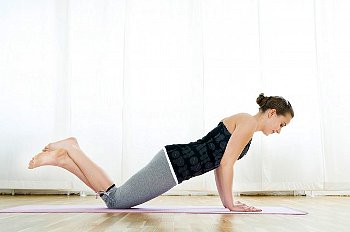
How to Perform the Modified Push-Up

Start Position: Get onto hands and knees with your wrists aligned under shoulders.  Cross your ankles.

Finish Position: Bend elbows and slowly lower your upper body toward the mat, until your elbows form right angles with your shoulders.  Return to start position.  Repeat for 10-12 repetitions.

Finish Position
Finish Position

Modification: Place a folded towel under your knees for extra cushion.  

Caution: Do not exceed your level of strength.  Pushing your body weight up is harder than lowering yourself down.  The stronger you are, the lower you can go.  Play it safe to avoid injury.

The actual number of repetitions is based on your strength.  If you can’t do 10 or 12 repetitions, do only what you can.  As you gain  strength, you’ll be able to take on more.

Copyright 2013 Irene Pastore and Blue Moon Personal Training

Quick Tip: 10 Tips To Avoid Injury At The Gym

MACHINE CHEST PRESS

MACHINE CHEST PRESS

WARM-UP

Start your routine with a warm-up.  Spend 10 minutes on a cardio machine, and work up to a light sweat.  

COOL-DOWN: Finish your routine with stretching.  Hold each stretch for 20 seconds.

WEIGHT MACHINES: Most machines have instructions, and illustrations showing proper body alignment.  Read the instructions so that you know how to use each machine.  If you need more help, ask a floor trainer.

LIFTING TECHNIQUE

  • Do not lift more weight than you can handle.  If your face turns beet red, and you can’t breathe, you’re lifting too much weight.  Overexertion leads to injury.
  • Do not swing dumbbells.  When weights are too heavy for your level of strength, you’re going to resort to swinging them instead of lifting.
  • Learn how to control free weights.  Barbells and dumbbells, known as free weights,  are more difficult to use than weight machines, because you have to control the weight while using correct alignment.  An out-of-control barbell is very dangerous to you and the people working around you.
  • If you’re new to lifting, start with machines, not free weights.

SEEK ADVICE

If you need advice, ask a trainer.  Gym members are not a reliable source of information.  Just because they belong to your gym, doesn’t mean they know any more than you do.

GROUP CLASSES

Let your instructor know if you have injuries before the class starts.  Ask their advice on whether the class is suitable for your level.  

PROPER CLOTHING

Always wear athletic footwear when training.  Proper footwear gives your feet support, and protects them from injury.

Copyright 2013 Irene Pastore and Blue Moon Personal Training
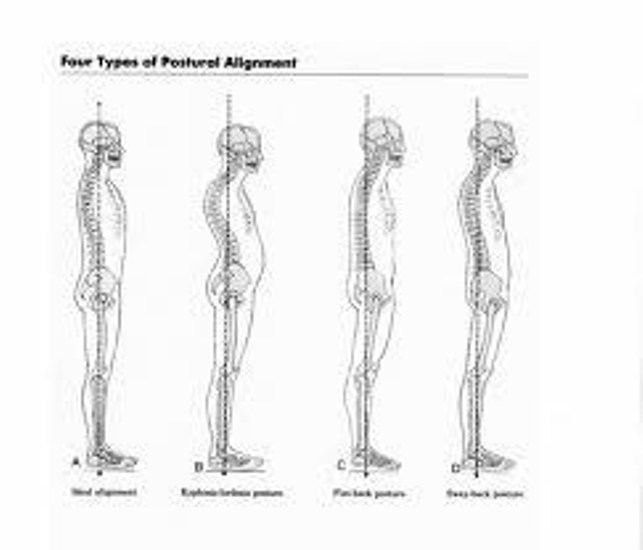
Good Posture vs. Bad Posture

Picture A shows a normal spine.  B, C, and D show poor posture.

WHAT IS GOOD POSTURE?

When you have good posture, your body is straight, with the ears, shoulders, hips, knees and ankles in a straight line.

WHY IS GOOD POSTURE IMPORTANT?

Muscles work as a team.  When you have good posture, your muscles are balanced, and keep your spine in proper alignment.  You feel healthy, and look good.

Muscle imbalance occurs when some muscles are stronger because you use them more often, while others are weak because you use them less.

If the muscles supporting your spine are weak, you’ll eventually experience muscle spasm, neck and back pain. Spinal misalignment also contributes to inefficient breathing.  Without proper exercise to bring the spine into its neutral position, these conditions get worse.

Muscle balance creates good posture, prevents injury, backache, spasms, and neck pain.  Good posture enhances self-esteem.

RETURN TO LIFE

In his book, Return To Life, published in 1945, Joseph Pilates wrote about the problems caused by spinal misalignment, lack of exercise, poor breathing habits, and the harmful effects of modern living on human health.   The same problems prevail today, if not more so.  The pace of life is fast, our society is sedentary, we overeat, and don’t exercise enough.

“Physical fitness is the first requisite for happiness” – Joseph Pilates

Copyright 2013 Irene Pastore and Blue Moon Personal Training