Known as the world’s most dangerous path, El Caminito del Rey,is newly restored and now open to the public.
The King’s Little Pathway, is a walkway, located along the walls of a narrow gorge, in the village of El Chorro, near Malaga Spain. The path rises 328 feet above the river below, and is the site where 5 hikers plunged to their death between 1999 and 2000.
Comprised of board walks, forest paths, and walkways, and characterized by long distance, and steep slopes, the estimated time for the full 7.7 km (4.7 miles) length of the linear hike, is between 4 and 5 hours. In some sections the path is no more than a yard wide. El Caminito del Rey reopened in March 2015.
If you’re venturing out on this path, better be sure you know what you’re doing. Wear proper clothing and footwear, know the upcoming weather conditions, bring plenty of water, food, and first aid. And, never hike alone.
A must-have for Pilates teachers, and practitioners. The Millennium Edition, is the complete works of Joseph H. Pilates.
This edition includes two books: Return To Life Through Contrology, originally published in 1945, and Your Health, first published in 1934.
Return To Life includes black and white photographs of Joseph Pilates at sixty years old, performing his entire original set of 34 mat exercises.
This book makes available in one volume all of his early 20th Century philosophies, principles, and theories about health and fitness. Each exercise is fully described, with Pilates original instructions.
Joseph Pilates was born in Germany in 1883, and died in New York City in 1967. He invented, and promoted his method of physical fitness, which he called Contrology.
Essentially teaching the Contrology method to dancers in his studio in New York, his method is now taught and practised worldwide, and is known as Pilates. The Millennium Editionis available in Kindle at Amazon, and in paperback at Barnes & Noble.
Copyright 2015 Irene Pastore, and Tour De Core Personal Training
You’re not the athletic type. You never went out for high school sports, don’t carry a tennis racquet, or Yoga mat. You may be under 35, or over 50. Weight rooms are not your thing, nor trampolines, or swinging a baseball bat. But yet, you qualify for the title “Everyday Athlete”. How is that?
You may need to rush to a meeting in a snowstorm, or hop over urban puddles on your way to catch a taxi. You may be carrying a cord of wood to fire up your wood burning stove. The activities of daily living, we take for granted, require strength, agility, fortitude, and stamina. Congratulations, you’ve earned the title, “Everyday Athlete”.
THE PROFILE OF AN EVERYDAY ATHLETE
– Stays slim. Knows that gluttony isn’t cool.
– Climbs stairs at work, instead of taking the elevator.
– Abides by the less driving rule.
– Rides a bicycle, or walks to work.
– Grabs an umbrella, and strides through the rain.
– Unafraid to slog through snow.
– Stays strong through blustery winds.
– Tackles tire changing, and wiping down a snowy windshield.
WHAT’S YOUR SECRET?
The Everyday Athlete knows the importance of strengthening the core muscles. That’s why they can fly over puddles, tackle snowstorms, zip up a flight of stairs, and never shrink from life’s difficult moments.
Copyright Irene Pastore and Tour de Core Personal Training
What does your posture say about you when you walk in to a job interview? Is your head jutting forward, and down? Are your shoulders rounded? Is your appearance slouched? If so, you’re not exactly portraying an air of confidence.
MOBILE DEVICES AND YOUR POSTURE
In today’s era of electronic devices, most working adults are in the habit of bending their neck forward, with the chin toward the chest.
As they slouch at their desk, use their cell phone, watch TV, videos, or surfing the web, their shoulders and upper back round forward, while the head juts forward and down.
Over time, looking down at your cell phone, removes the natural curve of your neck, puts strain on the muscles of your cervical spine, causing pinched nerves, and herniated discs. Doctors are seeing more patients with mobile technology-induced head, neck and back pain.
Chronic downward tilting of your head, is the result of lifestyle habits that encourage what chiropractors, and orthopedic doctors refer to as, forward head posture, and thoracic kyphosis, a rounding of the upper back.
Frequent cell phone texting is an example of a lifestyle habit that may result in poor spinal health.
Forward leaning of your head tightens chest muscles, and weakens the upper back. When your upper back weakens, it develops a rounded appearance, while your chest appears caved in, and your shoulders collapse forward.
On a job interview, you’ll want to look healthy and confident. Slumping forward with your head down conveys the opposite.
CORRECTIVE EXERCISE
Take heart, there is a solution to your problem. It’s called corrective exercise. Poor upper back, and neck posture can be reversed with strengthening exercises that target your upper back, stretching exercises that open the chest, and strengthening exercises for the back of your neck.
Copyright 2015 Irene Pastore, and Tour De Core Personal Training
With the exception of a few urban areas, we live in a country that encourages sitting, because our towns and cities are planned around the automobile.
We sit at the computer, in front of the TV, on the job, at the movies, dining out, and commuting to work. .
Hamstring Stretch
In many cities and towns, sidewalks are inadequate for pedestrians, making the car an absolute necessity, even for short, walkable errands.
Prolonged sitting weakens our muscles, makes us lethargic, creates a weak core, which in turn, develops poor posture. Medical doctors consider sitting to be the new smoking.
Do you have a job where you’re sitting most of the day? Do you have chronic low back pain? Does your neck feel stiff? Are your muscles so sore you can’t sit down? Is the time spent riding your horse not as enjoyable as you’d like it to be?
Targeted exercise provides solutions to remedy these problems.
EQUESTRIAN FITNESS AND CORE MUSCLES
Yoga Warrior 2 Hip Stretch
The muscles of the abs, back, pelvis and hips, make up the core. Strengthening these muscles is important, because the core stabilizes the spine, and protects it from injury,
While you’re moving, the core controls the position and motion of the torso over the pelvis. A strong core improves sports performance, and maintains healthy posture.
SOLUTIONS
Pilates Ab Exercise
Targeted exercise provides solutions to help you get rid of muscular tension, and weakness, develop better posture on and off the horse, and makes riding more effective.
PILATES EXERCISE
Pilates Mat and Reformer exercises are designed to make your core muscles strong.
If you’re not inclined towards Pilates, no worries, you can opt in to a fitness-based core exercise routine, using specialized core equipment to get the job done. Core exercises can also be performed without any equipment.
YOGA CORE EXERCISE
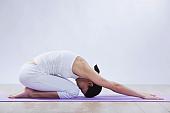
If you’re a Yoga fan, there are many poses that will strengthen your core muscles, stretch your Psoas, Back, and Hamstrings.
As you can see, there are many ways to stretch and strengthen your muscles. Here are a few suggestions.
Stretch the Psoas Muscle because this inner hip muscle tightens up when you do alot of sitting. Stretch your Back to release tension in tight muscles.
Yoga Back Stretch
The Hamstrings are the muscles of the posterior thigh. Theses muscles tighten up from excessive sitting. If you frequently do stair climbing, or cycling ,you should be stretching your Hamstrings on a regular basis.
Strengthen ;your Back and Abdominal Muscles, because these muscles work as a team to keep your posture healthy, and your spine well-supported.
Copyright 2015 Irene Pastore and Tour De Core Personal Training
This is another post about fitness accidents. Only this time, it was a tv stunt gone bad.
Did you ever notice someone at the gym walking backwards on a treadmill? Did you wonder whether they were into a new, trendy form of cardio exercise, trying to break the monotony, or maybe you thought they were doing something risky?
TREADMILL FALL
This is another post about fitness accidents. Only this time, it was a tv stunt gone bad.
On January 15, the Price Is Right announcer, George Gray, fell while walking backwards on a treadmill.
He held his script in one hand, and his microphone in the other. While reading his script, he took a quick fall landing on his back. He managed to get up, gain composure, and continue the show. He was lucky he didn’t suffer a head injury.
TREADMILL FALL
Treadmills are made for improving heart health. If you enjoy using a treadmill, use it safely.
Walking backwards on a treadmill, increases your chances of falling.
Walking backward as a land exercise, is used to improve balance, not heart health.
It only takes a split second to be thrown off balance, landing on your head, or your back. At the very least you can strain muscles, which, depending on the severity, can take weeks to heal.
Muscle strains can be very painful. At worst, serious head injuries, lacerations, and broken bones. By all means, don’t use it for an entertainment stunt.
Copyright 2015 Irene Pastore and Tour De Core Personal Training

 A must-have for Pilates teachers, and practitioners.
 urban puddles on your way to catch a taxi. You may be carrying a cord of wood to fire up your wood burning stove. The activities of daily living, we take for granted, require strength, agility, fortitude, and stamina. Congratulations, you’ve earned the title, “Everyday Athlete”.
 The
The  What does your posture say about you when you walk in to a job interview? Is your head jutting forward, and down? Are your shoulders rounded? Is your appearance slouched? If so, you’re not exactly portraying an air of confidence.




 Irene Pastore Fitness.com