
Understanding Your Heart Rate For Safe and Effective Exercise

Tracking your heart rate during exercise prevents you from overworking your heart. Your doctor may have recommended a training range for your heart based on your age and health.
In today’s post you’ll learn how to how to calculate your Maximum Heart Rate (MHR) and how to use it to determine how hard you’re working during exercise.

This concept is referred to as exercise intensity. In general, the higher the heart rate during exercise, the higher the exercise intensity. There are three levels of cardio exercise intensity: Low, Moderate and Vigorous.
Maximum Heart Rate Formula
The Maximum Heart Rate Formula is 220 – Your Age. If your age is 65, your Maximum Heart Rate (MHR) is 155. If your age is 55, your MHR is 165.
Exercise Intensity Levels
- Low Intensity is 40% to 50% of your MHR
- Moderate Intensity is 50% to 70% of your MHR
- Vigorous Intensity is 70% to 85% of your MHR
The Karvonen Formula
The Karvonen formula is a simple formula that is used to calculate your Target Heart Rate (THR) during exercise. The THR is a percentage of your Maximum Heart Rate.
- Maximum Heart Rate (MHR) is 220 – Your Age
- Resting Heart Rate (RHR) is your heart rate at rest
- Heart Rate Reserve (HRR) is your MHR – RHR
- Karvonen Formula is your HRR x Training % + RHR
Example of a 65 year old with a Resting Heart Rate of 72 and a Maximum Heart Rate of 155. The Training Heart Rate Zone for this individual is 113 to 142 Beats Per Minute (BPM).
MHR = 155
RHR = 72
HRR = 83
83 x 50% + 72 = 113 Beats Per Minute (BPM)
83 x .85% + 72 = 142 BPM
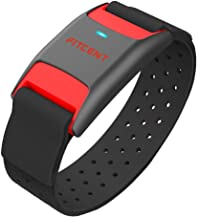
How To Monitor Your Heart Training Zone During Exercise
The easiest method to monitor your heart rate during exercise is to wear a heart rate monitor either on your wrist or around your chest. The wearable electronic device alerts you when you’re moving outside your Training Zone. This is a more convenient method of tracking your heart rate.
Monday’s post will discuss the RPE Method of monitoring exercise intensity.
Related Post

 Irene Pastore Fitness.com