
Ted Talks: The Benefits of Good Posture
November 13, 2021
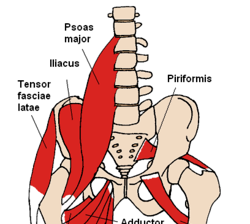
Opposite Muscles Work Together
Muscles work in opposite pairs. Ideally both pairs should be equal in strength and flexibility.
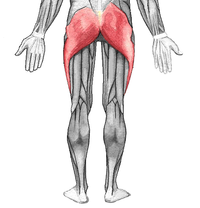
A pair of muscles has opposite functions. The iliopsoas and gluteals are opposing muscles.
The iliacus and psoas are two muscles that comprise the iliopsoas, a hip flexor, and low back stabilizer.
The iliopsoas brings your hips forward, while the gluteals bring your hips backward.
To get an idea how these muscles work together, stand up and swing one leg forward and back without bending your knee.
If your iliopsoas becomes excessively tight, your gluteals become lengthened, and can’t do their job. The imbalance affects the positioning of your pelvis, and the lower portion of your spine.
Pelvic Stabilization Improves Your Posture
When the iliopsoas and gluteals are working properly, they help to stabilize the pelvis and keep it in a neutral position. That means, your spine is balanced and healthy. Poor posture develops when the spine is not in neutral.
Why the Iliopsoas Muscle Becomes Tight
What Happens When Muscles Become Imbalanced
When the iliopsoas overpowers the gluteals, the pelvis is tilted forward increasing the arch in the low back.
Returning Muscle Balance With Pilates
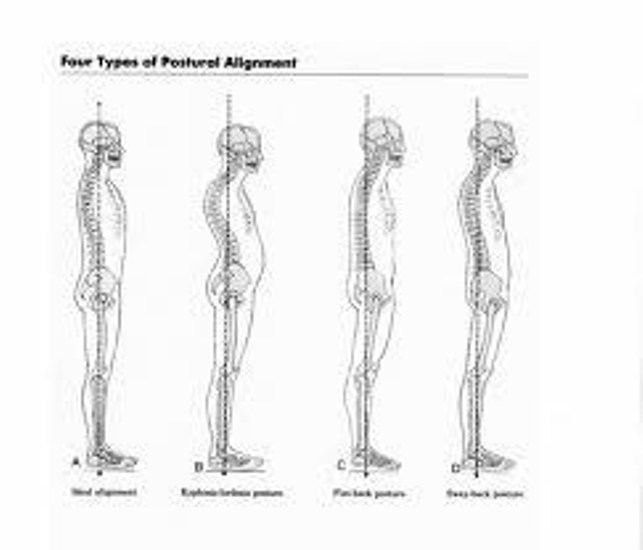
Human posture is considered healthy when the pelvis is in a neutral position, not tipped forward or back. From the side, the spine has three gentle curves (cervical/neck, thoracic/upperback, and lumbar/low back). When viewed from the back, the spinal column appears like a straight line. A healthy spine is pain-free.
Copyright 2013 Irene Pastore and Blue Moon Personal Training
WHAT IS GOOD POSTURE?
When you have good posture, your body is straight, with the ears, shoulders, hips, knees and ankles in a straight line.
WHY IS GOOD POSTURE IMPORTANT?
Muscles work as a team. When you have good posture, your muscles are balanced, and keep your spine in proper alignment. You feel healthy, and look good.
Muscle imbalance occurs when some muscles are stronger because you use them more often, while others are weak because you use them less.
If the muscles supporting your spine are weak, you’ll eventually experience muscle spasm, neck and back pain. Spinal misalignment also contributes to inefficient breathing. Without proper exercise to bring the spine into its neutral position, these conditions get worse.
Muscle balance creates good posture, prevents injury, backache, spasms, and neck pain. Good posture enhances self-esteem.
RETURN TO LIFE
In his book, Return To Life, published in 1945, Joseph Pilates wrote about the problems caused by spinal misalignment, lack of exercise, poor breathing habits, and the harmful effects of modern living on human health. The same problems prevail today, if not more so. The pace of life is fast, our society is sedentary, we overeat, and don’t exercise enough.
“Physical fitness is the first requisite for happiness” – Joseph Pilates
Copyright 2013 Irene Pastore and Blue Moon Personal Training
This is a photograph of two women in their early twenties. Both have poor posture. If it’s not corrected, it will get worse.
POOR POSTURE AND BODY LANGUAGE
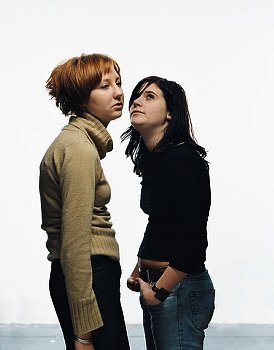
What does their body language say about them? Do they appear confident, heathy, fit, lethargic, dull, or happy? The way you carry your body, tells the world how you feel about yourself.
POSTURAL ASSESSMENT
Both women have an exaggerated curve in their upper back, their shoulders are rounded forward, their chests are caved in, their abdomens protrude, and their heads are forward and upright.
HOW DOES POOR POSTURE HAPPEN?
Postural problems develop from one or more lifestyle habits, such as leaning over a computer terminal, lack of appropriate exercise, habitual slouching when eating, doing homework, or reading.
CORRECTIVE PILATES EXERCISE
Pilates exercise can improve poor posture. Both women should begin their Pilates exercise routine with basic, modified exercises.
Strengthen the upper back: Modified Breast Stroke, Modified Swimming on All Fours, Modified Double Leg Kick.
Strengthen the abdominals: Modified Roll-Up With Pilates Band, Single Leg Stretch and Hundred on the Spine Supporter.
Open the chest and the abdominals: Pilates Chest and Abs Stretch on the Stability Ball.
Copyright 2013 Irene Pastore and Blue Moon Personal Training
LOOKING OLD BEFORE YOUR TIME

If you’re young and attractive today, over the next ten years you’re going to age fast, if you abuse your health. By the time you’re 50, you won’t recognize yourself in the mirror. You probably won’t believe that there could be such a drastic change in your looks. Want proof? Look at the family album.
7 WAYS TO GET OLD FAST
1) Put on plenty of extra weight. Excess weight is associated with chronic disease. And besides, pot bellies for men and women aren’t considered cool looking. Continue reading “7 Ways To Get Old Fast – For Anyone Under 30”
 Irene Pastore Fitness.com