
Ted Talks Video: How The Heart Actually Pumps Blood
July 12, 2021
How To Begin
Invest in a good pair of supportive athletic shoes designed for specifically for walking.
Check with your health care practitioner about your plans to start a fitness routine.
Based on your health, your doctor will either give you the go ahead, or restrictions.
Where Should You Walk?
Sidewalks – Local Parks – Recreation Centers – Treadmill
How Much Walking Should You Do?
> Start with several minutes of walking 2 to 3 times weekly, skipping a day in between to rest.
 > If you get tired, cut down on the time or distance. You may be doing too much.
> As your heart gets stronger, increase your walking time to 15 minutes every other day. When that routine feels easy, then add on another day, and increase your time to 20 to 30 minutes.
> Your end goal is to exercise your heart on most days of the week, for 20 to 30 minutes.
How Fast Should You Walk?
Remember the words perceived exertion. That means you should exercise according to how you feel. If you feel you’re working too hard, then slow your pace down.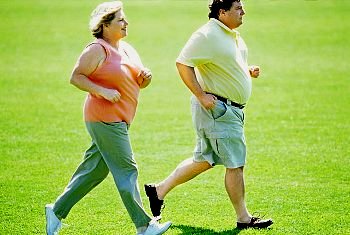
While doing a cardio walk, you should be able to carry on a simple conversation.
Your efforts should not feel easy or too difficult.
If you feel winded and worn out, cut back on your pace, or the amount of time your exercising, or both.
If you push too hard, you’ll feel exhausted. When exercise makes you feel unwell, you’ll want to quit.
How Fast Should Your Heart Beat?
The Heart Rate Zone (HRZ) is a guideline to understand how hard  your heart is working. You can use HRZ charts to assess your cardio walking efforts.
Age and gender are determining factors when using the HRZ.
Heart Rate Zone Information
MayoClinic “Exercise Intensity: How To Measure It”
American Heart Association: ” Target Heart Rates Chart”
Irene Pastore, is a Certified Personal Trainer, fitness blogger, health educator, and speaker. She has 23 years experience teaching exercise in New York City.. To read her complete bio, visit the About Page.
Getting on a bicycle is a fun way to get exercise, rather than riding a 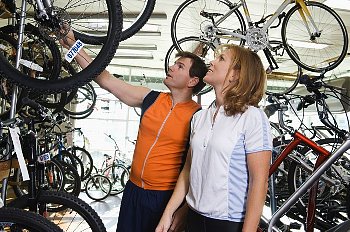 stationary bike at the gym.
Riding a bike improves heart health, burns calories, and gives your legs a good workout.
A bike will take you to work, help you do errands, bring home groceries, tour new places on your vacation, while improving your health.
Bicycles are designed to be used on different terrain, and for different purposes. Buying a bicycle doesn’t have to be confusing, if you do your research.
BICYCLE TYPES
Road Bike – lightweight, designed for speed.
Touring Bike – good for long distance. Stronger than road bikes. Good for carrying cargo.
Mountain Bike – wide tires. Good for rugged terrain. Comfortable. Not as fast as road bikes.
Cruisers – good for everyday use.
Recumbent: your body is in a comfortable, reclining position so that your weight is distributed on your glutes and back.
Electric Bike: powered by an electric motor, making pedaling easier. Good for commuters.
Folding Bike – bike-lovers can take this model with them on vacation. A good choice if you lack storage space.
Tandem Bike – an extended frame allows two people to ride one bicycle. Good for families who enjoy touring.
Cargo Bicycle – sturdy frames, wide tires, heavy-duty racks for carrying cargo such as groceries, sports equipment, or boxes.
BUYING TIPS
HOW MUCH SHOULD YOU PAY?
Like everything else, you get what you pay for. Your safety is very important when riding, after all you’ll be out in traffic. Buy a bike that won’t fall apart, or let you down.
Copyright 2013 Irene Pastore and Blue Moon Personal Training
http://www.youtube.com/watch?v=8yRdDnrB5kM
Jerry Lee Lewis, one of the original recording artists on Sun Records, at the piano in 1957. As you can see, it’s impossible not to get up and move. The link will take you to his website, where you can hear more of Jerry’s music on a 50’s jukebox. Check out Sun for more get up and move classic rock music.
MUSIC – AN EXERCISE MOTIVATOR
Do you know that music can help you start an exercise program? Just pick the music that you like and get up and start moving.
Admit it, when you’re home alone listening to your favorite tunes, don’t you sometimes get up and dance, when no one can see you? Sure you do. Just make it more of a regular habit, and then you’ll get a good cardio workout.
HOME CARDIO DANCE WORKOUTS TIPS
The exercise described in this post isn’t meant to replace the guidance of a personal trainer, in a live setting. Exercises performed incorrectly may result in injury.
Copyright 2012 Irene Pastore and Blue Moon Personal Training
 Irene Pastore Fitness.com