Understanding Your Heart Rate For Safe and Effective Exercise


Tracking your heart rate during exercise prevents you from overworking your heart. Your doctor may have recommended a training range for your heart based on your age and health.

In today’s post you’ll learn how to how to calculate your Maximum Heart Rate (MHR) and how to use it to determine how hard you’re working during exercise.

This concept is referred to as exercise intensity. In general, the higher the heart rate during exercise, the higher the exercise intensity. There are three levels of cardio exercise intensity: Low, Moderate and Vigorous.

Maximum Heart Rate Formula

The Maximum Heart Rate Formula is 220 – Your Age. If your age is 65, your Maximum Heart Rate (MHR) is 155. If your age is 55, your MHR is 165.

Exercise Intensity Levels

  • Low Intensity is 40% to 50% of your MHR
  • Moderate Intensity is 50% to 70% of your MHR
  • Vigorous Intensity is 70% to 85% of your MHR

The Karvonen Formula

The Karvonen formula is a simple formula that is used to calculate your Target Heart Rate (THR) during exercise. The THR is a percentage of your Maximum Heart Rate.

  • Maximum Heart Rate (MHR) is 220 – Your Age
  • Resting Heart Rate (RHR) is your heart rate at rest
  • Heart Rate Reserve (HRR) is your MHR – RHR
  • Karvonen Formula is your HRR x Training % + RHR

Example of a 65 year old with a Resting Heart Rate of 72 and a Maximum Heart Rate of 155. The Training Heart Rate Zone for this individual is 113 to 142 Beats Per Minute (BPM).

MHR = 155

RHR = 72

HRR = 83

83 x 50% + 72 = 113 Beats Per Minute (BPM)

83 x .85% + 72 = 142 BPM
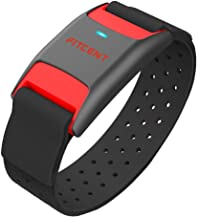
How To Monitor Your Heart Training Zone During Exercise

The easiest method to monitor your heart rate during exercise is to wear a heart rate monitor either on your wrist or around your chest. The wearable electronic device alerts you when you’re moving outside your Training Zone. This is a more convenient method of tracking your heart rate.

Monday’s post will discuss the RPE Method of monitoring exercise intensity.


Related Post

Learn How To Measure Your Resting Heart Rate and Why It Matters


According to the American Heart Association, the health benefits of regular cardio exercise include lower risk of heart disease, stroke, Type 2 Diabetes, high blood pressure, dementia, Alzheimer’s and several types of cancers.

Why It’s Important To Know Your Resting Heart Rate

Your Resting Heart Rate (RHR) is the baseline from which you’ll determine how hard your heart is working during cardio exercise and whether you’re within a safe exercise zone. Learning how to take your pulse to measure your Resting Heart Rate (RHR) is very easy.

What is A Resting Heart Rate

Your Resting Heart Rate (RHR) is the number of times your heart beats per minute when you’re at rest. A good time to check your RHR is in the morning before you get out of bed.

How To Check Your Resting Heart Rate

Have the palm of one hand face upward. Take your other hand and place three middle fingers on your wrist on the inside groove below the base of the thumb. Press lightly to feel the pulse under your fingers.

Using the second hand on a watch or clock, count the number of times your heart beats in 30 seconds. Multiply the number of beats by 2. For example, if your heart beats 40 times in 30 seconds, multiplied by 2 will equal 80 beats per minute (bpm). 80 bpm is your Resting Heart Rate (RHR).

According to the American Heart Association a normal Resting Heart Rate for most adults is between 60 to 100 beats per minute.


Related Post

Top Heart Rate Monitors to Buy in 2024


Fitness enthusiasts who are looking for guidance and want to learn how to make an informed decision about buying a heart rate monitor, read the expertly written article in MedicalNewsToday, Best Heart Rate Monitoring Watches in 2024.

A heart rate monitor is a wearable device that measures your heart rate during exercise. Your heart rate is also known as your pulse rate.

Monitoring your heart rate during exercise helps you stay in a safe heart rate training zone. If you have a heart or cardiovascular condition, monitoring your target heart rate is crucial for safe and effective exercise.

Ready to buy a heart rate monitor? Click the link below to find out which one might be best for you.


Best Heart Rate Monitoring Watches in 2024 – MedicalNewsToday.com 9/9/24

The Link Between Cardiovascular Health and Hearing


There are studies that have shown that a healthy cardiovascular system (heart, arteries, and veins),has a positive effect on hearing.

Cardiovascular exercise is one of the components to a well-rounded fitness program. Activities such as hiking, using a stair climber, power walking, dancing, hoola-hooping are few examples of heart healthy forms of exercise.

When your heart is healthy it provides oxygen rich blood throughout your body. Good circulation plays a role in maintaining good hearing health.


Learn more about the connection between hearing loss and heart disease at HealthyHearing.com

Virtual Fitness: How To Do A BOSU Dyno Plank

Strengthen Your Heart, Legs, Arms And Core With The Dyno Plank
BOSU Dyno Plank Set Up: Use the BOSU Powerstax >link< under two BOSUs. Begin the routine on the highest stack, and work toward the lowest to finish.
INSTRUCTIONS: Start on the highest stack. Jog quickly in place as you count to 4. Perform 4 planks. Then switch to the next BOSU. Jog quickly in place as you count to 4. Perform 4 planks. Switch to the last BOSU. Jog quickly in place as you count to 4. Perform 4 Alternating Single Leg Planks. Repeat routine for 2 to 4 cycles, or to tolerance.
HOW TO USE THIS ROUTINE: 1) Use it as a warm-up for strength training, or stretching. 2) Use it as a 20-minute cardio circuit routine.

Shop Our Health & Fitness Store


EXERCISE DOs and DONTs – As with all exercise programs, when using exercise videos that appear on this site, you need to use common sense. If your muscles are weak, either do the modifications, or don’t attempt this exercise if it’s too difficult for you. When starting an exercise program, be sure to discuss your plans with your healthcare provider

Virtual Fitness: How To Do Squat-to-Jump Back

Squat-To-Jump Back Performed With A Medicine Ball Uses Only 3 Moves
SQUAT-TO-JUMP BACK bodyweight exercise strengthens the heart, thighs, legs, arms and shoulders. This exercise can be used as a warm-up before strength training or stretching.
VARIATION: To increase workload, add a push-up after the jump back.
MODIFICATION: to reduce workload, eliminate the medicine ball, or substitute an air-filled ball.

EXERCISE DOs and DONTs – As with all exercise programs, when using exercise videos that appear on this site, you need to use common sense. If your muscles are weak, either do the modifications, or don’t attempt this exercise if it’s too difficult for you. When starting an exercise program, be sure to discuss your plans with your healthcare provider