
How to Improve Floor Mobility and Boost Longevity—Starting Today
August 8, 2025

The Sit and Rise Test – A Powerful Predictor of Longevity
Yesterday, we introduced the Sit and Rise Test, a powerful predictor of longevity. But what if you struggled with the test , or couldn’t do it at all?
The good news? You can train for floor mobility, even in your 50s, 60s, and beyond. The key is building strength, balance, and flexibility through functional movements you can practice daily.
Why This Matters For Pre-Retirees
- Prevents loss of independence.
- Reduces the risk of falls and injuries.
- Builds confidence for staying active in later years.
Basic Mobility Home Exercises

Supported Squat
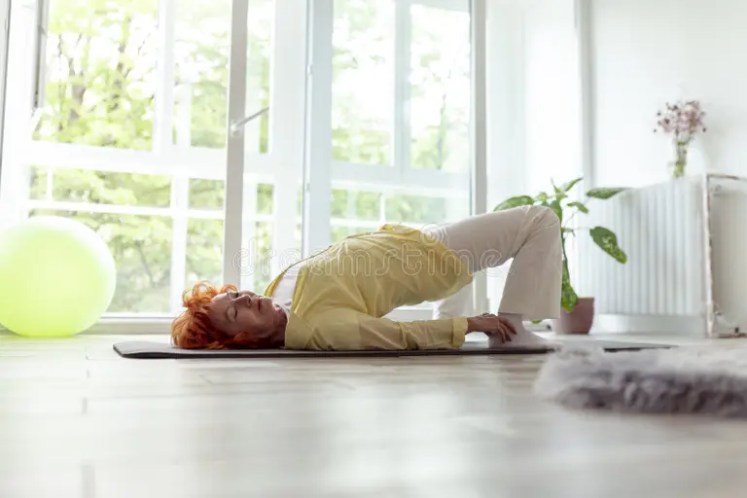
Bridge

Chair Squat To Stand
Supported Squat
- Build thigh, glute, and leg strength.
- Start in a standing position.
- Hold onto a sturdy object.
- Slowly lower to a mid squat.
- Slowly return to standing position.
- Repeat 3 to 5 repetitions or to tolerance.
Bridges
- Use an exercise mat.
- Build thigh, glute, and leg strength.
- Lie on your back with feet hip width apart.
- Arms at your sides. Palms down.
- Slowly lift your back off the mat until knees are higher than shoulders.
- Slowly lower your back to the start position.
- Repeat 3 to 5 repetitions or to tolerance.
Chair Squat To Stand
- Use a sturdy chair that won’t move during exercise.
- Build thigh, glute, and leg strength.
- Sit down in the chair with arms in front of you.
- Slowy get up from the chair with arms in front of you.
- Slowly sit down in the chair with arms in front of you.
- Repeat 3 to 5 repetitions or to tolerance.
Quick Tip
Start small. Even doing just 5 to 10 minutes a day can make a real difference over time, especially for pre-retirees aiming to stay active and independent for the long haul.
Closing Thought
Don’t wait until you lose the ability to get off the floor. Train for it now. Your future self will thank you.


 Irene Pastore Fitness.com