Pilates For Horseback Riders

Riding Without Saddle or Bridle

When you watch this video of Stacy Westfall riding Vaquero without saddle or bridle, you can see that the rider is very strong.

The horse is a powerful force under the rider, especially when it picks up speed and begins to run.  When the horse makes a sudden stop, the rider remains stable. How is this done without her falling to the ground? The answer is a strong core.

Pilates Principles and Horseback Riding

Pilates principles are compatible with the goals of horseback riders.

  • Control
  • Precision
  • Breath
  • Flow 
  • Centering
  • Stamina

Pilates exercise emphasizes training the body to maintain neutral spine, the healthiest position for human posture, during all types of activities.  Neutral spine is achieved by developing the muscles that support the spine.

In horseback riding, a flexible spine, strong abdominals, and the ability to hold the spine in a neutral position, gives the rider a postural advantage, making time spent with their horse more enjoyable.

Muscle balance, spinal alignment, pelvic and shoulder stability are high points in Pilates training, as well as in horseback riding.  While riding, the spine should be flexible but not hyperextended (overarched), and the shoulders even and relaxed.

Pilates cross training for riding, is further enhanced by adding equipment such as the Magic Ring, Pilates Bands, and exercise balls.  The equipment simulates the riding experience by adding resistance and release under instability.

Copyright 2013 Irene Pastore and Blue Moon Personal Training
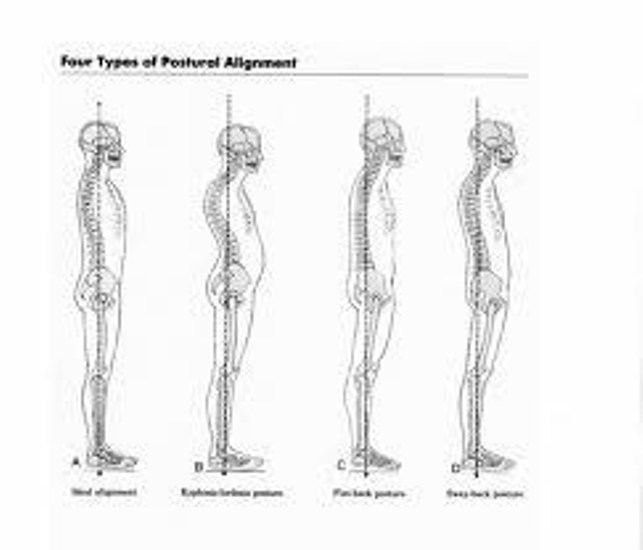
Good Posture vs. Bad Posture

Picture A shows a normal spine.  B, C, and D show poor posture.

WHAT IS GOOD POSTURE?

When you have good posture, your body is straight, with the ears, shoulders, hips, knees and ankles in a straight line.

WHY IS GOOD POSTURE IMPORTANT?

Muscles work as a team.  When you have good posture, your muscles are balanced, and keep your spine in proper alignment.  You feel healthy, and look good.

Muscle imbalance occurs when some muscles are stronger because you use them more often, while others are weak because you use them less.

If the muscles supporting your spine are weak, you’ll eventually experience muscle spasm, neck and back pain. Spinal misalignment also contributes to inefficient breathing.  Without proper exercise to bring the spine into its neutral position, these conditions get worse.

Muscle balance creates good posture, prevents injury, backache, spasms, and neck pain.  Good posture enhances self-esteem.

RETURN TO LIFE

In his book, Return To Life, published in 1945, Joseph Pilates wrote about the problems caused by spinal misalignment, lack of exercise, poor breathing habits, and the harmful effects of modern living on human health.   The same problems prevail today, if not more so.  The pace of life is fast, our society is sedentary, we overeat, and don’t exercise enough.

“Physical fitness is the first requisite for happiness” – Joseph Pilates

Copyright 2013 Irene Pastore and Blue Moon Personal Training
Correcting Poor Posture with Pilates

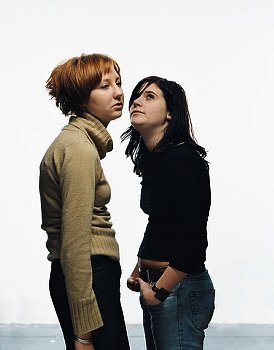
This is a photograph of two women in their early twenties.  Both have poor posture.  If it’s not corrected, it will get worse.

POOR POSTURE AND BODY LANGUAGE

What does their body language say about them?  Do they appear confident, heathy, fit, lethargic, dull, or happy?  The way you carry your body, tells the world how you feel about yourself.

POSTURAL ASSESSMENT

Both women have an exaggerated curve in their upper back, their shoulders are rounded forward, their chests are caved in, their abdomens protrude, and their heads are forward and upright.

HOW DOES POOR POSTURE HAPPEN?

Postural problems develop from one or more lifestyle habits, such as leaning over a computer terminal,  lack of appropriate exercise, habitual slouching when eating, doing homework, or reading.

CORRECTIVE PILATES EXERCISE

Pilates exercise can improve poor posture.  Both women should begin their Pilates exercise routine with basic, modified exercises.

Strengthen the upper back:  Modified Breast Stroke, Modified Swimming on All Fours, Modified Double Leg Kick.

Strengthen the abdominals: Modified Roll-Up With Pilates Band, Single Leg Stretch and Hundred on the Spine Supporter.

Open the chest and the abdominals: Pilates Chest and Abs Stretch on the Stability Ball.

Copyright 2013 Irene Pastore and Blue Moon Personal Training


Pilates Improves Your Posture

A Healthy Posture With Normal Spinal Curves

Good posture is necessary for efficient movement. When someone has good posture it means that all muscles are in a balanced state, the spine maintains its normal curves, and the pelvis is in a neutral position.  When these requirements are not met, we experience poor posture.

WHAT MIGHT HAPPEN IF YOU HAVE POOR POSTURE?

  • Backache
  • Headache
  • Stress on bones, joints, muscles and ligaments
  • Muscle injury
  • Pain
  • Postural deformity
  • Bone injury

LIFESTYLE HABITS CAN CAUSE POOR POSTURE

  • Wearing a heavy purse over your shoulder.
  • Low self-esteem.
  • Obesity.
  • Carrying an overloaded backpack, or briefcase.  

    Poor Posture With Misaligned Spinal Curves
  • Slouching over your desk.
  • Sleeping on your stomach.
  • Wearing high heel shoes.

HOW PILATES EXERCISE CAN HELP

Poor posture creates muscle imbalance, meaning that some muscles are strong while others are weak.

Pilates exercises strengthen and stretch the muscles that support your spine, and can help you reclaim healthy spinal alignment.  The goal of Pilates is to bring  the spinal curves into their neutral position.

Copyright 2013 Irene Pastore and Blue Moon Personal Training