Brooklyn Man Dies Hiking Alone in Mexico

Fatal hiking fall.

Exercise shouldn’t kill you.  Most people would agree with that. But the reality is that exercise does kill, when you’re not prepared, don’t understand the risks, or your fitness level isn’t up to the task.

MOTHER NATURE DOESN’T FORGIVE

If you’re out in the wilderness, on a rocky hillside, riding the rapids, or up on a mountain, you need a plan, and know what you’re doing, because the mountains don’t care, and hikes can turn deadly.

Get a grip. Wear appropriate footwear. Obey trail signs and don’t wander off.

Hiking alone in Mexico, 25 year-old Hari Simran Singh Khalsa of Brooklyn, New York, was found dead on January 2.  Missing since December 30, his body was found in a ravine near the town of Tepoztlan.

Khalsa told his wife that he planned to go on a short hike, and in a later message told her he walked further than intended, and also told friends that he climbed too high onto another mountain by mistake.

His family said he died of head injuries from a fall over rough terrain, in the Tepozteco Mountains.

In his last text message to a friend, he said that he was on top of a very high mountain, and not sure how to get down.  He had a liter (about 4 cups) of water and a bag of trail mix.

Study maps. Know where you’re going, and what to expect.

10 HIKING TIPS TO PREVENT ACCIDENTS

  1. Get in shape.  Strengthen your core.
  2. Learn about the terrain.
  3. Check the weather forecast before you set out.
  4. Wear proper clothing, and footwear for the anticipated weather conditions, and terrain..
  5. Carry enough water and food for your trip.
  6. Don’t hike alone.
  7. As you ascend, make note of your ability to descend.  If you think you won’t be able to navigate the terrain safely on the way down, turn around and go back.
  8. Study maps of the hiking trails before setting out on your trip.
  9. Keep in mind that in remote areas, your cell phone is useless.
  10. Know what type of wildlife you may encounter.

CORE STRENGTH MAY SAVE YOUR LIFE

A strong core prevents falls, by stabilizing your spinal muscles.  Instead of landing on your head, back, or knees, you’ll remain upright, whether you’re walking on icy pavement in a city street, or engaged in wilderness sports and recreation activities.

Here’s a list of related articles about outdoor recreation safety.

How To Exercise Your Core

Strong Core Muscles Can Save Your Life

How To Kill Yourself In A Kayak,

How To Prevent Hiking Accidents.

Copyright 2015 Irene Pastore and Tour De Core Personal Training


Senator Harry Reid’s Exercise Injury

Senator Harry Reid after his exercise accident.

This story is all over the internet, so I’ll just add my two cents. While Senator Harry Reid was exercising with an exercise band, it broke, hit his eye, causing him to lose his balance, and take a bad fall.  He hit his head on nearby equipment, breaking bones near his right eye.  He was also diagnosed with a concussion, and broken ribs.  As of today, medical reports say that he may lose vision in his right eye.

CAN AN EXERCISE BAND CAUSE BODILY INJURY?

Do not hold the band In front of your face.

Indeed it can.  In fact, any type of exercise equipment can cause injury if not used carefully.

Elastic bands seem innocuous, because they’re non-imposing, they don’t intimidate, they almost look like a child’s toy.

OLDER ADULTS AND EXERCISE BANDS

Senator Reid is 75 years old.  He was standing while exercising with an elastic band.

Either he pulled the band beyond a safe range, causing it to snap, or the band may have been overused, and should have been replaced.  He then lost his balance, and fell head first onto exercise equipment in his home gym.

Persons over 65 should use great care while exercising to prevent accidents.  Loss of balance is more likely  in an older adult.

HOW NOT TO USE AN EXERCISE BAND

  • Do not pull the band beyond its’ capacity, causing it to break.

    Do not stretch the band beyond its’s limits.
  • Don’t use the band while standing, if you think you might lose your balance during exercise..
  • Don’t hold the band near your face, especially close to your eyes.  If it breaks, you can suffer an eye injury.
  • Don’t use the band if you have long fingernails, because they can puncture the band with holes, causing the band to break while in use.
  • Don’t wear jewelry while using the band,  to avoid puncturing the band.
  • Don’t let your kids play with the bands.  Elastic bands are not toys.
  • Don’t allow distractions while you’re exercising with bands, and all other equipment.  Stay focused on what you’re doing.
  • Don’t store your exercise bands near heat or sun.  Store them in a cool, dry place.
  • Keep the bands away from dogs and cats to prevent injury to your animals.
  • Replace bands after extended use.

Copyright 2015 Irene Pastore, and Tour de Core Personal Training.

Dog Buddy Workouts I

Trendy Exercise Gets Dogs and Owners Off The Couch

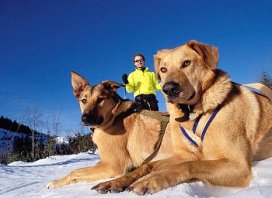
One of the newest trends in fitness is the buddy workout with your dog.  This post will give you a few basics on how to get started.  This is the first article in a series, so stay tuned.
Cardio Exercise For You and Your Dog

  • Jogging for you and your dog.
  • Swimming for you and your dog.
  • Agility Training for you and your dog.  
  • Bicycling for you.  Jogging for your dog.
  • Rollerblading for you.  Jogging for your dog.
  • Cross Country Skiing for you.  Jogging for your dog.

How To Train

You’ll need to monitor your dog’s exertion, just as you would your own. Start with short distances first. Gradually increase the time. If your dog shows signs of fatigue, or tags behind you, slow down and cut back.

What You Need To Do First

Check with your vet before starting your dog on an exercise routine.

Warnings

The health and well-being of your dog should be uppermost. Too much exercise, or the wrong way to exercise can injure your dog.

  • Constant leash pulling can damage your dog’s throat.
  • Too much exercise can result in blisters on your dog’s paw pads after a run, especially dogs with light colored pads.
  • Stiffness, soreness, and exhaustion are signs of too much exercise.
  • Large dogs are more prone to arthritis and hip dysplasia (an inherited degenerative condition that can cause painful arthritis, and crippling lameness).  Sustained jogging can be tough on their joints.  Swimming is a better alternative.  Get your vets advice on the best type of exercise.
  • Dogs and people don’t run the same. It is more common for a dog to run, stop and explore, and run again.  Take a short run for 10 minutes, take a break, and then try another short run.
  • Avoid running with your dog on hot days.  
  • Exercise in the shade, and out of the sun.
  • Exercise on grass or dirt roads to help avoid damaging your dog’s paw pads.
  • Sustained jogging or running isn’t recommended for young dogs whose 
  • bones haven’t formed.
  • Be sure your dog is trained properly if you do online skating or bicycling. Your dog should be trained to run beside you without pulling.

Paw Protection During Outdoor Exercise 

Keep your dog’s paw pads protected from injuries, and cold weather conditions.  Several companies manufacture and sell canine protective footwear products.  Here are a few suggestions: Muttluks.com, UltraPaws.com, Amazon.com.

Copyright 2014 Irene Pastore and TourDeCore.com

Kayak Fatalities

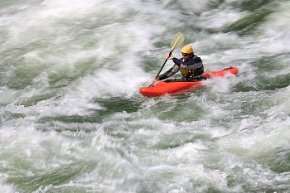
Killing Yourself In a Kayak Isn’t Difficult

I had planned to write a post on the subject of kayak sporting accidents.  In researching the net for information, I found a thorough, well written article on Squidoo, titled, “How To Kill Yourself In A Kayak.” Just click on the link to get there.  I couldn’t have done a better job. Based on recent news stories, the author chronicles deadly kayaking mistakes, due to poor judgement.
Nature Doesn’t Forgive

I’ve written posts on the increase in hiking fatalities, and sports injuries.  The wilderness doesn’t forgive ignorance.   Before setting out, you must know about weather conditions, what to bring with you, what to wear,  local wildlife, and what to do during emergencies.  You have to be fit enough to handle your kayak, or whatever your chosen sport might be.

Shannon Christy, 23 Dies In Overturned Kayak

This is a sad story of a kayaker who died on the Potomac River in July 2013, when her kayak overturned, as she went down the rapids.  She became entrapped, and subsequently drowned.  ABC 7 covered the incident.

A Strong Core Means Better Paddling, Less Fatigue, Fewer Accidents

To take on sports, or recreational activities, you have to be fit.  In kayaking, you need a resilient core for effective paddling, as well as strong shoulders, and arms.  Your core stabilizes your spine and gives you the upper edge in your chosen sport, or recreational activity, because you’re able to produce more efficient force without hurting yourself.

When your core is weak, it makes other parts of your body take on roles they weren’t meant for. For example,  you might wind up with fatigue in your shoulders, or arms.  Worse yet, core weakness may result in overuse shoulder, and arm injuries associated with paddling.

An Excellent Core Exercise

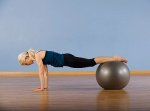
Planks are one of the best, and least complicated exercises to strengthen your core.  Planks are performed on an exercise mat from several positions.

Click the links for instructions on how to do each exercise.

Abs on the ball   Downward Plank Abs On The Ball


  Pilates Upward Plank


Advanced side plank  Advanced Side Plank


Pilates For Kayakers CRISS CROSS

Click the link to read my post on specific Pilates exercises for kayakers.

Copyright 2014 Irene Pastore and TourDeCore.com

20 Sports With High Risk of Head Injuries

HIGH RISK SPORTS AND RECREATIONAL ACTIVITIES 

The American Association of Neurological Surgeons (www.aans.org), published an online article covering the statistics on brain injuries and sports. These statistics were compiled between 2008-2009 based on U.S. hospital emergency room visits.

According to the Brain Injury Association of New York State (www.bianys.org), brain injuries cause more death than any other sports injury.

2009 Estimated head injuries in U.S. Hospital Emergency Rooms 

  • Cycling: 85,389
  • Football: 46,948
  • Baseball and Softball: 38,394
  • Basketball: 34,692
  • Water Sports (Diving, Scuba Diving, Surfing, Swimming, Water Polo,   Water Skiing, Water Tubing): 28,716
  • Powered Recreational Vehicles (ATVs, Dune Buggies, Go-Carts, Mini bikes, Off-road): 26,606
  • Soccer: 24,184
  • Skateboards/Scooters: 23,114
  • Fitness/Exercise/Health Club: 18,012
  • Winter Sports (Skiing, Sledding, Snowboarding, Snowmobiling): 16,948
  • Horseback Riding: 14,466
  • Gymnastics/Dance/Cheerleading: 10,223
  • Golf: 10,035
  • Hockey: 8,145
  • Other Ball Sports and Balls, Unspecified: 6,883
  • Trampolines: 5,919
  • Rugby/Lacrosse: 5,794
  • Roller and Inline Skating: 3,320
  • Ice Skating: 4,608

Copyright 2014 Irene Pastore and TourDeCore.com

Back Care for Equestrians

THE EQUESTRIAN AND BACK PAIN

Riding is a strenuous sport that requires the equestrian to maintain a neutral spine, while sitting in the English or Western saddle.

The saddle, is literally a backless chair, offering no support for the spine.  The rider must generate support using strong core muscles.

Little needs to be said about the debilitating effects of back pain for equestrians.  No one wants to, or should ride, when in pain.  The more uncomfortable you are, the less you’ll be able to enjoy being with your horse. He’ll miss you too.

Learning what causes back pain, and taking preventive measures, will bring many happy riding years.  The easiest, and most cost-effective solution, is exercise.

PREVENTION THROUGH CORE TRAINING EXERCISE

Regular exercise is highly recommended for prevention of back pain, and maintaining a healthy back.

Pilates and Yoga keeps riders both strong and flexible. Pilates strengthens your back and abs, Yoga stretches critical areas important for riding, as well as developing tranquility.

Fitness-derived core exercises are an excellent method to strengthen and stretch muscles that are vital for riders.

COMMON CAUSES OF BACK PAIN

  • Muscle spasm
  • Awkward twisting, or bending motions
  • Incorrect lifting a heavy object
  • Spinal trauma
  • Bending down and abrupt turning around
  • Muscle imbalance
  • Coughing or sneezing
  • Prolonged sitting
  • Sports injuries
  • Aging
  • Overweight and obesity
  • Poor sitting or standing posture
  • Arthritis

FACTS ABOUT BACK PAIN

  • Back Pain is one of the most common causes of doctor’s visits in the United States
  • Back Pain affects most people at least once during their lifetime.
  • Untreated back pain can make daily activities difficult or impossible.
  • Back pain affects about 60 to 80 percent of American adults,
  • More than 26 million Americans between the ages of 20-64 experience frequent back pain.
  • Back pain is one of the most common reasons for missed work.
  • Low back pain is the single leading cause of disability worldwide.
  • Americans spend at least $50 billion yearly on back pain.

From the American Chiropractic Association and The American Academy of Pain Medicine

STANDARD MEDICAL SOLUTIONS

  • Over-the counter pain relievers
  • Hot or cold packs
  • Exercise
  • Medication
  • Physical therapy
  • Complementary or alternative treatments
  • Injections
  • Surgery

Copyright 2014 Irene Pastore and Tour De Core Personal Training