How Seniors Can Monitor Heart Rate Effectively


Seniors can improve their heart health by learning how to monitor their heart rate during exercise. There are several ways that ensure you’re within your target training zone. Two easy methods are discussed in this post. Click the links below this article for more information on this subject.

Rating of Perceived Exertion

Use the Rate of Perceived Exertion Chart to determine how hard your heart is working during exercise. RPE measures your exertion on a scale from 1 to 10 based on how you feel. It is often used in combination with wearable heart rate trackers. By using RPE you are self-monitoring the level of difficulty of your exercise.

The Talk Test

The Talk Test Is an aerobic test that measures your ability to talk during physical activity at various levels of intensity. Intensity refers to the level of difficulty. There are three levels of intensity during the Talk Test: Low, Moderate and High. These levels correspond to the RPE as Low 3-4, Moderate 5-6, and High 8-9.


Related Posts

Understanding Your Heart Rate For Safe and Effective Exercise


Tracking your heart rate during exercise prevents you from overworking your heart. Your doctor may have recommended a training range for your heart based on your age and health.

In today’s post you’ll learn how to how to calculate your Maximum Heart Rate (MHR) and how to use it to determine how hard you’re working during exercise.

This concept is referred to as exercise intensity. In general, the higher the heart rate during exercise, the higher the exercise intensity. There are three levels of cardio exercise intensity: Low, Moderate and Vigorous.

Maximum Heart Rate Formula

The Maximum Heart Rate Formula is 220 – Your Age. If your age is 65, your Maximum Heart Rate (MHR) is 155. If your age is 55, your MHR is 165.

Exercise Intensity Levels

  • Low Intensity is 40% to 50% of your MHR
  • Moderate Intensity is 50% to 70% of your MHR
  • Vigorous Intensity is 70% to 85% of your MHR

The Karvonen Formula

The Karvonen formula is a simple formula that is used to calculate your Target Heart Rate (THR) during exercise. The THR is a percentage of your Maximum Heart Rate.

  • Maximum Heart Rate (MHR) is 220 – Your Age
  • Resting Heart Rate (RHR) is your heart rate at rest
  • Heart Rate Reserve (HRR) is your MHR – RHR
  • Karvonen Formula is your HRR x Training % + RHR

Example of a 65 year old with a Resting Heart Rate of 72 and a Maximum Heart Rate of 155. The Training Heart Rate Zone for this individual is 113 to 142 Beats Per Minute (BPM).

MHR = 155

RHR = 72

HRR = 83

83 x 50% + 72 = 113 Beats Per Minute (BPM)

83 x .85% + 72 = 142 BPM

How To Monitor Your Heart Training Zone During Exercise

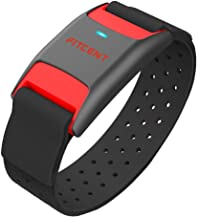
The easiest method to monitor your heart rate during exercise is to wear a heart rate monitor either on your wrist or around your chest. The wearable electronic device alerts you when you’re moving outside your Training Zone. This is a more convenient method of tracking your heart rate.

Monday’s post will discuss the RPE Method of monitoring exercise intensity.


Related Post

Learn How To Measure Your Resting Heart Rate and Why It Matters


According to the American Heart Association, the health benefits of regular cardio exercise include lower risk of heart disease, stroke, Type 2 Diabetes, high blood pressure, dementia, Alzheimer’s and several types of cancers.

Why It’s Important To Know Your Resting Heart Rate

Your Resting Heart Rate (RHR) is the baseline from which you’ll determine how hard your heart is working during cardio exercise and whether you’re within a safe exercise zone. Learning how to take your pulse to measure your Resting Heart Rate (RHR) is very easy.

What is A Resting Heart Rate

Your Resting Heart Rate (RHR) is the number of times your heart beats per minute when you’re at rest. A good time to check your RHR is in the morning before you get out of bed.

How To Check Your Resting Heart Rate

Have the palm of one hand face upward. Take your other hand and place three middle fingers on your wrist on the inside groove below the base of the thumb. Press lightly to feel the pulse under your fingers.

Using the second hand on a watch or clock, count the number of times your heart beats in 30 seconds. Multiply the number of beats by 2. For example, if your heart beats 40 times in 30 seconds, multiplied by 2 will equal 80 beats per minute (bpm). 80 bpm is your Resting Heart Rate (RHR).

According to the American Heart Association a normal Resting Heart Rate for most adults is between 60 to 100 beats per minute.


Related Post

Boost Your Health with Magnesium-Rich Foods


More than 300 essential processes within your body rely on magnesium, an essential mineral and a co-factor for hundreds of enzymes that are vital to sustain good health.

Your body doesn’t make magnesium, so you need to consume a magnesium rich diet to maintain healthy levels.

Dark Chocolate is rich in magnesium with a 1 ounce serving containing 64 to 65% of magnesium. In the vegetable family, Swiss Chard is an excellent source of magnesium, while also containing Vitamins A, C and K.

Bodily Functions That Require Adequate Magnesium

  • Normal Muscle and Nerve Function
  • Blood Pressure Regulation
  • Energy Production
  • Protein Synthesis
  • Bone Density
  • DNA Repair
  • Formation of Bones and Teeth

Dietary Sources of Magnesium

  • Dark Leafy Greens such as Spinach, Swiss Chard and Collard Greens
  • Nuts and Seeds – Almonds and Cashews rank the highest
  • Legumes such as Black Beans that contain 60 mg in 1/2 cup
  • Fiber-Rich Whole Grains such as Quinoa and Plain Shredded Wheat
  • Fatty Fish such as Salmon, Mackerel and Halibut
  • Low Fat Dairy Products such as Yogurt and Non-Fat Milk
  • Dark Chocolate contains high amounts of magnesium

Related Posts

Managing Exercise in Seniors: Avoiding Overtraining


The benefits of regular exercise for older adults are well documented. But is it possible to overexercise? What happens when you do too much and how do you know if you’re doing too much?

The answer to this question is yes, you can overdo it. Too much of a good thing isn’t good. Use this checklist to determine if you’re doing too much.

Symptoms of Overexercising

  • Fatigue
  • Chronic colds
  • Loss of energy
  • Weight gain
  • Decline in stamina
  • Muscle soreness that lasts more than a few days
  • Repetitive injuries
  • Decline in exercise performance
  • Poor sleep
  • Muscular strains and pains
  • Overuse injuries
  • Reduced appetite

Solutions

  • Reduce exercise time
  • Reduce vigorous exercise days
  • Schedule resting days for lighter exercise such as Yoga, Stretching or Tai Chi
  • Discontinue exercises that are not suitable for you
  • Be sure you have sufficient strength to perform your favorite recreational sport
  • Include core strength in your fitness routine, especially if you play golf, pickleball, tennis or baseball
  • Avoid keeping up with your younger self