How Seniors Can Monitor Heart Rate Effectively


Seniors can improve their heart health by learning how to monitor their heart rate during exercise. There are several ways that ensure you’re within your target training zone. Two easy methods are discussed in this post. Click the links below this article for more information on this subject.

Rating of Perceived Exertion

Use the Rate of Perceived Exertion Chart to determine how hard your heart is working during exercise. RPE measures your exertion on a scale from 1 to 10 based on how you feel. It is often used in combination with wearable heart rate trackers. By using RPE you are self-monitoring the level of difficulty of your exercise.

The Talk Test

The Talk Test Is an aerobic test that measures your ability to talk during physical activity at various levels of intensity. Intensity refers to the level of difficulty. There are three levels of intensity during the Talk Test: Low, Moderate and High. These levels correspond to the RPE as Low 3-4, Moderate 5-6, and High 8-9.


Related Posts

Understanding Your Heart Rate For Safe and Effective Exercise


Tracking your heart rate during exercise prevents you from overworking your heart. Your doctor may have recommended a training range for your heart based on your age and health.

In today’s post you’ll learn how to how to calculate your Maximum Heart Rate (MHR) and how to use it to determine how hard you’re working during exercise.

This concept is referred to as exercise intensity. In general, the higher the heart rate during exercise, the higher the exercise intensity. There are three levels of cardio exercise intensity: Low, Moderate and Vigorous.

Maximum Heart Rate Formula

The Maximum Heart Rate Formula is 220 – Your Age. If your age is 65, your Maximum Heart Rate (MHR) is 155. If your age is 55, your MHR is 165.

Exercise Intensity Levels

  • Low Intensity is 40% to 50% of your MHR
  • Moderate Intensity is 50% to 70% of your MHR
  • Vigorous Intensity is 70% to 85% of your MHR

The Karvonen Formula

The Karvonen formula is a simple formula that is used to calculate your Target Heart Rate (THR) during exercise. The THR is a percentage of your Maximum Heart Rate.

  • Maximum Heart Rate (MHR) is 220 – Your Age
  • Resting Heart Rate (RHR) is your heart rate at rest
  • Heart Rate Reserve (HRR) is your MHR – RHR
  • Karvonen Formula is your HRR x Training % + RHR

Example of a 65 year old with a Resting Heart Rate of 72 and a Maximum Heart Rate of 155. The Training Heart Rate Zone for this individual is 113 to 142 Beats Per Minute (BPM).

MHR = 155

RHR = 72

HRR = 83

83 x 50% + 72 = 113 Beats Per Minute (BPM)

83 x .85% + 72 = 142 BPM

How To Monitor Your Heart Training Zone During Exercise

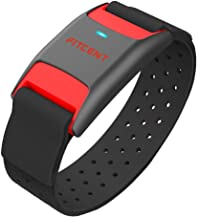
The easiest method to monitor your heart rate during exercise is to wear a heart rate monitor either on your wrist or around your chest. The wearable electronic device alerts you when you’re moving outside your Training Zone. This is a more convenient method of tracking your heart rate.

Monday’s post will discuss the RPE Method of monitoring exercise intensity.


Related Post

Learn How To Measure Your Resting Heart Rate and Why It Matters


According to the American Heart Association, the health benefits of regular cardio exercise include lower risk of heart disease, stroke, Type 2 Diabetes, high blood pressure, dementia, Alzheimer’s and several types of cancers.

Why It’s Important To Know Your Resting Heart Rate

Your Resting Heart Rate (RHR) is the baseline from which you’ll determine how hard your heart is working during cardio exercise and whether you’re within a safe exercise zone. Learning how to take your pulse to measure your Resting Heart Rate (RHR) is very easy.

What is A Resting Heart Rate

Your Resting Heart Rate (RHR) is the number of times your heart beats per minute when you’re at rest. A good time to check your RHR is in the morning before you get out of bed.

How To Check Your Resting Heart Rate

Have the palm of one hand face upward. Take your other hand and place three middle fingers on your wrist on the inside groove below the base of the thumb. Press lightly to feel the pulse under your fingers.

Using the second hand on a watch or clock, count the number of times your heart beats in 30 seconds. Multiply the number of beats by 2. For example, if your heart beats 40 times in 30 seconds, multiplied by 2 will equal 80 beats per minute (bpm). 80 bpm is your Resting Heart Rate (RHR).

According to the American Heart Association a normal Resting Heart Rate for most adults is between 60 to 100 beats per minute.


Related Post

Age-Defying Fitness: Insights from 93-Year-Old Indoor Rowing Champion


Active older adults can teach us how to understand aging. Richard Morgan 93 holds a four-time world champion in indoor rowing. Morgan started exercising at 73.

In 2023 the physiology lab at the University of Limerick in Ireland, tested his heart, metabolism, lungs and bodyfat composition. Owing to his fitness routine, he is in remarkable physical condition, with the aerobic capacity of a healthy 30 or 40-year-old.


Read the entire January 2024 article from HealthTodayMagazine.com.

How Dr. Roizen Reversed His Biological Age by 20 Years


“Dr . Michael Roizen reports that his biological age is now just 57.6 years, thanks to his disciplined fitness routine and lifestyle choices”.

“In a society fixated on youth and longevity, Dr Michael Roizen, the 78-year-old Chief Wellness Officer at Cleveland Clinic, asserts that he has effectively reversed his biological age by an impressive 20 years. Dr Roizen reports that his biological age is now just 57.6 years, thanks to his disciplined fitness routine and lifestyle choices”.

I’m glad to see a doctor who has a regular health and fitness routine. He’s a positive role model for his patients and colleagues.


Read the entire July 25, 2024 article about Dr. Roizen at NDTV.com.