Why Older Adults Need Core Strength

INJURIES FROM FALLS ARE INCREASING

Falls in older adults are becoming more common. Seniors who fall, may suffer serious injury, or death.

Falling down isn’t a natural part of aging.  It doesn’t have to happen. Prevention can go a long way to protect you.

Once injured from a fall, many older adults develop a fear of falling again. They may limit their activities, hoping to prevent another fall.

THE STORY OF JULIAN SACKS

After taking a fall in the New York City subway in 2008, Julian Sacks fell again. He lost interest in life, stopped eating, and died.  The story was reported on ABC News.

STATISTICS FROM THE CENTERS FOR DISEASE CONTROL

  • Every year 1 out of 3 adults 65 and over falls.
  • 20 to 30 percent of people who fall, suffer moderate to severe injuries, such as cuts and bruises, fractured hips, and head injuries.
  • The most common areas subject to breaks, are the pelvis, spine, forearm, leg, hip, upper arm, and hand.
  • Most fatal falls occur at home.

HOW CORE TRAINING HELPS SENIORS

  • A stronger core means you’re more stable, while going about your daily activities. 
  • Strengthening core muscles helps to maintain your independence.
  • Core strength improves your balance. You’re going to stop falling.
  • Life becomes more pleasant, when you lose your fear of taking a fall.

Copyright 2013 Irene Pastore and Blue Moon Personal Training
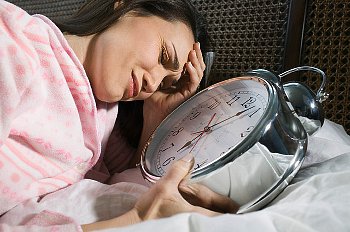
Sleep Deprivation Can Make You Sick

WHY YOU CAN’T GET TO SLEEP

According to American Sleep Medicine, 40 million American suffer with sleep disorders.  The National Institutes of Health estimate the figure to be as high as 50 to 70 million.

Tossing and turning, while trying to get to sleep night after night, is called insomnia.  Some of the most common causes of insomnia are:

Worrying 

Job stress

Eating food or beverages containing caffeine before bedtime: chocolate candy, coffee, tea, cookies containing chocolate, or coffee flavoring.

Smoking before bed.  Nicotine is a stimulant.

Exercising within 5 hours before bedtime.  Exercise is stimulating, and may keep you awake.

Eating a heavy meal close to bedtime.

HOW TO HANDLE INSOMNIA

  • Get regular exercise.
  • Maintain a sleep schedule.  Go to sleep and awake at the same time everyday.
  • Before bed treat yourself to a relaxing ritual.  Take a bubble bath. Light candles and practise meditation. Read a book. Listen to calming music.  Practice Hatha Yoga.
  • Make your bedroom comfortable for sleeping.  Adjust room temperature if it interferes with your ability to sleep.  Clear out clutter.  Use room darkening shades. Sleep on a comfortable mattress.

SLEEP DEPRIVATION CAN MAKE YOU SICK

Sleep disorders are very common, and treatable.  If you don’t get enough rest, you might develop any one of these symptoms, or health conditions.

  • Increased risk of high blood pressure, and weight gain.
  • Impaired judgement, performance and mood.
  • Falling asleep at the wheel, resulting in a driving accident.
  • Anxiety symptoms
  • Heart attack, and stroke.
  • Depression
  • Cardiovascular disease and hypertension.
  • Obesity

RESOURCES

American Academy of Sleep Medicine

American Sleep Association

National Sleep Foundation

National Institutes of Health

American Sleep Medicine

Copyright 2013 Irene Pastore and Blue Moon Personal Training
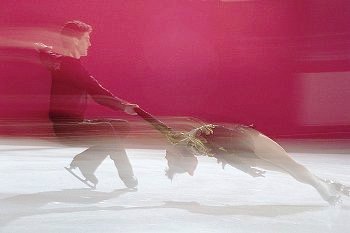
Pilates For Figure Skaters

Figure skating is a demanding, aesthetic sport that requires concentration, agility, power, core strength, flexibility, and balance.   Each of these attributes are the essence of the Pilates method of exercise.

Core strength stabilizes, coördinates, and balances the entire body during figure skating.

Upright Pilates exercises performed while standing on an unstable surface, mimics the skaters position, and experience while on ice.

Off ice creative use of core strengthening equipment during standing Pilates, simulates the skating experience in the rink.

Gliders, sliders and even towels replicate the ice, while developing the skater’s core muscles, challenging their balance, and improving flexibility.

Dynamic power begins with the the core.  The outer muscles may be strong, but those smaller muscles that support the spine and pelvis come into play during skating.  Balancing on one foot, Jumps, spins, spirals require supreme strength in the core.

Copyright 2013 Irene Pastore and Blue Moon Personal Training

Pilates For Climbers

Pilates is an exercise method created by Joseph Pilates during the 1920s.  Pilates taught his students to develop strength in the center of the body.  He called this center, the powerhouse.

Once the powerhouse is strong, muscles are balanced, movement becomes efficient, our postures improve, aches and pains disappear.

Climbing is an exhilarating sport where flexibility helps you reach further, while muscular strength gives you the ability to manoeuver through tough spots.

The margin for error is narrow.  Taking a fall may cause injury, or loss of life. No one wants either.  Strengthening your core with Pilates makes you a dynamo of balanced power.

If you’re thinking about taking up climbing, or are already involved, why not be sure your body is fully prepared for the challenges ahead.

Pilates gives you the upper edge on becoming a successful climber, rather than a quitter or someone who is frequently injured.

The skills you need for climbing are inherent in Pilates: concentration, breathing, focus, control,  precision, flow and stamina.

Designed to create mobility and strength, the Pilates method of exercise, teaches mind over muscles, to be as supple as a cat, not to sacrifice knowledge to speed, breathing through all movement, and concentrating on correct form.

Copyright 2013 Irene Pastore and Blue Moon Personal Training
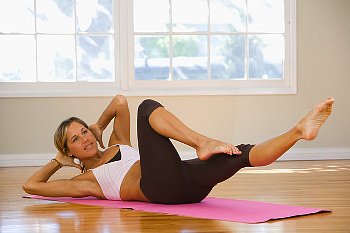
Pilates For Kayakers

Criss Cross

MOVE FROM THE TORSO In order to execute movement from the torso, and not the arms, kayakers, and people who engage in rowing sports, need a strong core. Fatigue in the back, shoulders, and neck occur, when core muscles are weak. Unless the core is strengthened, injuries are likely to occur in the shoulders. PILATES MAT TORSO EXERCISES FOR KAYAKERS  Upper torso exercises that strengthen the oblique abdominal muscles. 

  • Obliques Roll Back  
  • Criss Cross Obliques
  • Saw
  • Spine Turn

Upper torso exercises that strengthen the abdominal muscles, and oblique abdominals.

  • The Hundred
  • Roll Up
  • Teaser

Upper torso exercises that strengthen the back, hamstrings, and gluteals.

  • Swimming
  • Double Leg Kick

Copyright 2013 Irene Pastore and Blue Moon Personal Training

Blind Horses

Through the kindness of  people who run rescue farms and ranches, visually impaired horses are given a second chance.  

Many of the animal rescues were abandoned, abused, underfed, and suffering from diseases related to malnutrition and neglect.

Resources follow for anyone interested in caring, volunteering, adopting, or donating to organizations that help blind horses, and donkeys.

BLIND HORSE RESOURCES

BlindHorses.org.  Operates Rolling Dog Farm, that cares for disabled dogs and horses.  Provides information for owners of blind horses: how to care for a blind horse, eye diseases, myths, and what to do if your horse is losing its vision. Accepts donations.  Located in Lancaster, NH.

FlurrysHope. com.  Second chances for blind horses. Rescue, how to care for blind horses, information about equine eye disorders, adoptions.  The only rescue in the nation that rides blind horses.  Accepts donations. Located in Madison, NC.

HartSong Ranch Animal Sanctuary.  Rescue and sanctuary for blind and disabled horses, and other farm animals. Advocacy and education.  Accepts donations.  Located in Greenwood, CA

Lost Acres Horse Rescue and Rehabilitation.  Safe haven for abused, neglected, severely disabled, blind horses and donkeys.  Accepts donations. Located in Chillicothe, OH

Horse Net Horse Rescue.  Non-profit, volunteer organization that operates on donations.  Specializes in seniors and blind horses.  Rehabilitation and rehoming of homeless horses.  Located in Mount Airy, Maryland.

Copyright 2013 Irene Pastore and Blue Moon Personal Training