Pilates For Climbers

Pilates is an exercise method created by Joseph Pilates during the 1920s.  Pilates taught his students to develop strength in the center of the body.  He called this center, the powerhouse.

Once the powerhouse is strong, muscles are balanced, movement becomes efficient, our postures improve, aches and pains disappear.

Climbing is an exhilarating sport where flexibility helps you reach further, while muscular strength gives you the ability to manoeuver through tough spots.

The margin for error is narrow.  Taking a fall may cause injury, or loss of life. No one wants either.  Strengthening your core with Pilates makes you a dynamo of balanced power.

If you’re thinking about taking up climbing, or are already involved, why not be sure your body is fully prepared for the challenges ahead.

Pilates gives you the upper edge on becoming a successful climber, rather than a quitter or someone who is frequently injured.

The skills you need for climbing are inherent in Pilates: concentration, breathing, focus, control,  precision, flow and stamina.

Designed to create mobility and strength, the Pilates method of exercise, teaches mind over muscles, to be as supple as a cat, not to sacrifice knowledge to speed, breathing through all movement, and concentrating on correct form.

Copyright 2013 Irene Pastore and Blue Moon Personal Training
Pilates For Kayakers

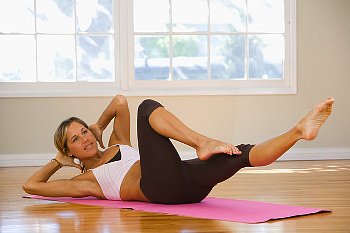
Criss Cross

MOVE FROM THE TORSO In order to execute movement from the torso, and not the arms, kayakers, and people who engage in rowing sports, need a strong core. Fatigue in the back, shoulders, and neck occur, when core muscles are weak. Unless the core is strengthened, injuries are likely to occur in the shoulders. PILATES MAT TORSO EXERCISES FOR KAYAKERS  Upper torso exercises that strengthen the oblique abdominal muscles. 

  • Obliques Roll Back  
  • Criss Cross Obliques
  • Saw
  • Spine Turn

Upper torso exercises that strengthen the abdominal muscles, and oblique abdominals.

  • The Hundred
  • Roll Up
  • Teaser

Upper torso exercises that strengthen the back, hamstrings, and gluteals.

  • Swimming
  • Double Leg Kick

Copyright 2013 Irene Pastore and Blue Moon Personal Training

Blind Horses

Through the kindness of  people who run rescue farms and ranches, visually impaired horses are given a second chance.  

Many of the animal rescues were abandoned, abused, underfed, and suffering from diseases related to malnutrition and neglect.

Resources follow for anyone interested in caring, volunteering, adopting, or donating to organizations that help blind horses, and donkeys.

BLIND HORSE RESOURCES

BlindHorses.org.  Operates Rolling Dog Farm, that cares for disabled dogs and horses.  Provides information for owners of blind horses: how to care for a blind horse, eye diseases, myths, and what to do if your horse is losing its vision. Accepts donations.  Located in Lancaster, NH.

FlurrysHope. com.  Second chances for blind horses. Rescue, how to care for blind horses, information about equine eye disorders, adoptions.  The only rescue in the nation that rides blind horses.  Accepts donations. Located in Madison, NC.

HartSong Ranch Animal Sanctuary.  Rescue and sanctuary for blind and disabled horses, and other farm animals. Advocacy and education.  Accepts donations.  Located in Greenwood, CA

Lost Acres Horse Rescue and Rehabilitation.  Safe haven for abused, neglected, severely disabled, blind horses and donkeys.  Accepts donations. Located in Chillicothe, OH

Horse Net Horse Rescue.  Non-profit, volunteer organization that operates on donations.  Specializes in seniors and blind horses.  Rehabilitation and rehoming of homeless horses.  Located in Mount Airy, Maryland.

Copyright 2013 Irene Pastore and Blue Moon Personal Training

You Are A Lion! And Other Fun Yoga Poses

You Are A Lion and Other Fun Yoga Poses by Taeeun Yoo.

A sweet, Illustrated book that introduces young children to animal-inspired Yoga poses.

Along with the name of the Yoga pose, a small child is shown holding each pose.

Turning the page we see the lions, cats, frogs, dogs, and butterflies, in poses named after them.

“Sit on your knees tongue out!  You are a lion, king of the jungle, roaring so loud, make the woods rumble.”

Hardbound copies are available at Amazon, for $14.92, or borrow one from your local library.

Copyright 2013 Irene Pastore and Blue Moon Personal Training

How To Prevent Hiking Accidents

7 REASONS FOR HIKING ACCIDENTS

  1. Getting lost on the trail, especially under extreme weather conditions.
  2. Unprepared for changes in the weather.
  3. Failure to learn about altered terrain conditions before your hike.
  4. Improper clothing and footwear.
  5. Insufficient food or water.
  6. Hiking under inadvisable weather conditions.
  7. Failure to bring necessary equipment, and equipment for possible emergencies.

RECENT NEWS STORIES

Elizabeth Bervel dies hiking the wave in the Utah-Arizona border.   7/23/13

UCSD professor found dead on San Diego hiking trail.  7/6/13

Hiker dies after falling 12 feet while hiking the Snohomish County trail in Washington.  7/29/13

Hiker and two sons found dead on Missouri hiking trail.  1/14/13

Located in Pasadena, California, Eaton Canyon death toll rises.   8/9/11

Eaton Canyon death toll is five in two years. 5/5/13

HOW TO PREPARE FOR YOUR HIKING TRIP

Be prepared for changes in the weather: a drop in temperature, a sudden rainstorm, or heavy rains blocking out the trail

Be prepared for heat if you’re hiking in the desert.  Forego your trip if you know you can’t tolerate heat for long periods of time.

Be prepared for missing trail signs.  Always bring a map, and a compass to get direction.

Bring lightweight clothing that will keep you warm, and raingear to keep you dry.

Bring reliable flashlights.

RESOURCES FOR HIKERS

Educate yourself before going out on the trail.   Whether it’s a day hike or a longer backpack into the high country, being prepared for your trip keeps your journey uninterrupted and safe.

The U.S. National Park Service, U.S. Department of the Interior

Backpacker Magazine

REI

National Weather Service

The Sierra Club

Appalachian Mountain Club

Copyright 2013 Irene Pastore and Blue Moon Personal Training
Self Myofacial Release Improves Flexibility

WHAT IS SELF MYOFACIAL RELEASE?

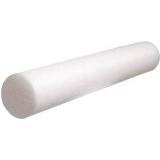
You might have never heard of  self myofacial release, (SMR) but maybe you’ve seen white, blue or black foam rollers at your local gym, and wondered what they were.

FOAM ROLLER
White Foam Roller For Deep Tissue Massage

Personal trainers, and physical therapists recommend roam roller SMR to improve flexibility, relieve muscle pain, and avoid injury.

The roller is used to release adhesions in order to restore flexibility.  They’re an easy, inexpensive method of pressure point, deep tissue massage.

Simply place the roller over an adhesion by sitting, or leaning over the roller for 30 to 90 seconds, or less, depending on tolerance.

WHY USE A FOAM ROLLER?

Foam rollers are used to help release trigger points, that inhibit your flexibility potential.  Trigger points are painful spots located in muscle that are caused by trauma.  These inelastic spots are also called adhesions, or knots.

Rollers are a must for athletes, especially runners who need to break down soft tissue adhesions, improve flexibility, and range of motion in hamstrings, IT Band, and calves.

TYPES OF FOAM ROLLERS

BLACK FOAM ROLLERS
Black Foam Rollers For Deep Tissue Massage

Foam rollers come in a variety of sizes and density. Some are softer, while others are more firm.  Length sizes range in inches from 36, 24, 18, and 12.  Most rollers are 6 inches deep.

WHERE TO BUY

Amazon.com has a wide selection of foam rollers, and a handy chart explaining how to buy them.

Copyright 2013 Irene Pastore and Blue Moon Personal Training