Equipment of the Month: Peanut Stability Ball

EQUIPMENT OF THE MONTHPeanut Stability Ball 

Recommended Product: The Peanut is a good choice for older adults, pregnant women, rehab patients, or anyone who needs more stability than the standard exercise, ball during exercise.

Product Category: Core Strength, Balance and Stability.

How To Use It: The Peanut Stability Ball activates the core muscles and improves balance.  Easier to control than the standard stability ball.

Portability: Remove the air from the ball, and you can carry it anywhere in a tote, or shopping bag.  The inflated peanut shaped ball takes up more room than the standard size stability ball.  You may need to purchase a pump, unless it’s included in the price.

Benefits: Excellent addition to a home gym.  Cost effective. Offers a total body workout. Often includes exercise chart with purchase. The Peanut Stability Ball acclimates older adults to core balance training.

Fitness Level: Beginners, Seniors , Prenatal, Rehab

Type of Workout: Seated, prone, and supine exercises


Irene Pastore, is a Certified Personal Trainer, fitness blogger, health educator, and speaker. She has 23 years experience teaching exercise in New York City..  For her complete bio, visit the About Page.  

Hiking Accident Prevention: Safe Trip Planning Know Before You Go

Trip Planning Resources For Hikers and Backpackers


Backcountry trip planning is crucial for your safety. Before your trip, check the weather conditions.  In some areas, typical weather patterns  may display an abrupt drop in temperature, sudden rain, or snowfall. 

FOREST TRAIL IN WINTER

Choose trails that match your health and fitness skills.  Learn about seasonal trail conditions, and crossings.

Whether you’re planning a day, an overnight trip, or longer trek, preparation is key while traveling the backcountry. Advance planning can save your life.  Learn trail survival skills before you go.

Start your trip early, in order to allow sufficient daylight for your journey. Check the weather report. If it doesn’t look good, plan an alternative trail with better conditions.

If you decide to hike in extreme weather, you’ll need to spend more time preparing for your trip. Study the trails, and check up-to-the-minute weather reports, warnings and alerts. While on your trip, if things get bad, turn around and head back. It isn’t worth risking your life. There’s always another day, and another trail. But you only have one life.

NATIONAL PARKS, FORESTS AND WEATHER

Slot canyon in Utah
SLOT CANYON UTAH

The National Park Service: A federal government website that provides information about current weather, trail conditions, warnings, alerts, and news. Safety Tips from the NPS.

U.S. Forest Service: A federal government website that provides information about visiting national forests for multiple outdoor activities.

National Weather Service: A federal government agency that provides weather forecasts, and warnings of all types of hazardous weather conditions affecting the public.


This is a partial list of state websites that provide information about current weather, trail conditions, warnings, alerts, and news about parks and recreation areas. To find additional state parks websites, use the name of the state, followed by the keywords state parks.


StateParks.com: A non-government website to American State Parks.

Hike-NewEngland.com: A non-government website to an online trail guide for New England.

Appalachian Mountain Club: Trip planning, conservation, education, guided adventures.

Adirondack Almanack: Adirondack Explorer’s Online News Journal. Covers regional history, arts, nature, food, and news. The Adirondack Mountains are located in New York State.


Irene Pastore, is a Certified Personal Trainer, fitness blogger, health educator, and speaker. She has 25 years experience teaching exercise in New York City. Visit the About Page to read her bio.

February Is National Chocolate Lovers Month


CHOCOLATE OCCASIONS

Valentine’s Day February 14 – Birthday – Wedding Anniversary – Christmas – New Year – EasterMilestoneBirth – GraduationPromotion – Engagement


Irene Pastore, is a Certified Personal Trainer, fitness blogger, health educator, and speaker. She has 23 years experience teaching exercise in New York City.  For her complete bio, visit the About Page.  

Hiking Accident Prevention Series: Appalachian Trail Safety Tips


Hiking Advice From the Appalachian Trail Conservancy


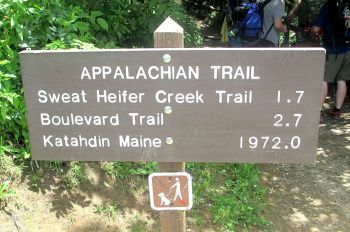
 The Appalachian Trail is approximately 2,190 miles long. It crosses 14 states, 6 national parks, and 8 national forests. The trail begins at Springer Mountain, Georgia, and ends at Mount Katahdin, Maine.  


H I K I N G  S A F E T Y  T I P S

Don’t hike alone. You are safest with a group; neither a single partner nor a dog is a guarantee of safety. Be creative.  If in doubt, move on.  Always trust your instincts about other people.

Leave your hiking plans with someone at home and check in frequently. Establish a time you will check in upon completion of your trip, as well as a procedure to follow if you fail to check in. On longer hikes or thru-hikes, provide ATC’s number, 304-535-6331.

Be wary of strangers. Be friendly, but cautious. Don’t tell strangers your plans. Avoid people who act suspiciously, seem hostile, or are intoxicated.

Don’t camp near roads. Be aware that anywhere people congregate — including shelters and designated campsites — may have greater risk.  When tenting, find a location not easily seen from the trail.

Don’t camp near roads. Be aware that anywhere people congregate — including shelters and designated campsites — may have greater risk. When tenting, find a location not easily seen from the trail.

• The Appalachian Trail Conservancy discourages the carrying of firearms.

Eliminate opportunities for theft. Don’t bring jewelry. Hide your money. If you must leave your pack, hide it, or leave it with someone trustworthy.

Use the Trail registers (the notebooks stored at most shelters). If someone needs to locate you, or if a serious crime has been committed along the trail, the first place authorities will look is in the registers.

In an emergency, note where you are and call 911.  Report emergencies or incidents to ATC at incident@appalachiantrail.org or by calling 304-535-6331. Suspicious or illegal behavior should be reported to the local rangers or local law enforcement (911 usually works, but other phone numbers are on official AT maps) as well as ATC.

Be mentally prepared for the risks you may encounter. If you encounter trouble, chances are a law enforcement officer or ranger will not be nearby and a cellphone may not work.

Always  a carry current trail maps and know how to use them.

Stay alert. Pay attention to details of your surroundings and people you encounter, and look for anything that does not fit or sends a red flag. It is easier to avoid getting into a dangerous situation than to get out of one. Trust your instincts about strangers.

Avoid hitchhiking or accepting rides: Hikers needing to get into town should make arrangements beforehand and budget for shuttles or a taxi.

WEATHER  RELATED  HIKING  SAFETY  TIPS

Pay attention to the changing skies. Sudden spells of “off-season” cold weather, hail, and even snow are common along many parts of the Appalachian Trail. Winter-like weather often occurs in late spring or early fall in the Southern Appalachians, Vermont, New Hampshire and Maine.

Hypothermia: A cold rain can be the most dangerous weather for hikers, because it can cause hypothermia, a dangerous lowering of the body’s core temperature due to exposure to cold, wind and rain chill. Dress in layers of synthetic clothing, eat well, stay hydrated, and know when to take refuge in a warm sleeping bag and tent or shelter.

Lightning: The odds of being struck by lightning are low, but if a thunderstorm is coming, immediately leave exposed areas. Boulders, rocky overhangs, and shallow caves offer no protection from lightning.

Sheltering in hard-roofed automobiles or large buildings is best. Avoid tall structures, such as ski lifts, flagpoles, power line towers, and the tallest trees, solitary rocks, or open hilltops and clearings. If caught in the open, crouch down on a pad, or roll into a ball.

Heat: Dry hot summers are surprisingly common along the trail. Water may be scarce on humid days, sweat does not evaporate well, and many hikers face the danger of heat stroke and heat exhaustion if they haven’t taken proper precautions. Wear a hat and sunscreen and stay well hydrated.

Source: Appalachian Trail Conservancy www.appalachiantrail.org.


10 Ways To Spend Your Tax Refund on Health and Fitness

Here are 10 gift suggestions, on how to invest your tax refund, into health and fitness, for yourself, a family member, or a friend.

  1. PORTABLE JUICER:  Buy a juicer and start drinking fresh juice instead of store bought juice, or soda pop.  Click on the link to read more about this fruit juicer, and smoothie maker. This one is priced around $23.00 on Amazon.
  2. RICE COOKER: Buy a rice cooker to prepare brown rice, instead of that white yucky rice that gets stuck to the bottom of the pan.  Click on the link to read about an Oster brand for around $20.00 at Amazon.
  3. VEGETABLE STEAMER: This link will take you to Amazon where you can read about simple, inexpensive stainless steel steamers, and more complex digital models.  Cooking vegetables in a steamer retains the vitamins, minerals, taste, color, and texture of food.
  4. OLIVE OIL MISTER-SPRAYER: Fill the mister with oil and herbs and mist your food instead of dumping excess oil over your meals.  This device allows you to control your portion, and helps to cut back on calories.  This mister sells for around $20.00 on Amazon.
  5. QUICK VEGETABLE SPIRAL SLICER: Instantly turns zucchini into spaghetti.  Cut back on grains, and add more veggies to your diet with this easy-to-use, hand-held, kitchen gadget..
  6. EXERCISE MAT: Treat yourself to a thick exercise mat instead of that old worn out excuse-for-a-mat that you’ve had for longer than you remember.  MatsMatsMats.com sells a wide selection of exercise mats.
  7. SUBSCRIPTIONS: There’s a magazine for every type of  recreational activity.  Magazines educate, inform, and keep you up-to-date on your sport.  If you’re planning an adventure recreational adventure magazines will help you plan your trip. Here are ideas: Cycling, Backpacking, Downhill or Cross Country Skiing, Yoga, Pilates, Bowling, Running, Kayaking, Climbing, Canoeing. Search either of these websites for fitness and health magazine subscriptions: Magazine.com , Amazon.com.
  8. TRAVEL YOGA MAT: Travel mats fit into packs, bags and suitcases.  Get yourself a light weight, foldable Yoga mat at MatsMatsMats.com
  9. TRX HOME GYM: Get an anywhere workout with this device. Adaptable to out or indoor envirnments.  Take it to the beach, park, hotel, or your home.  Sets up fast.  Order it from TRXTraining.com.
  10. HIKING BACKPACK: Visit L.L. Bean if you’re looking for a backpack.  They’ve been around since 1912, and specialize in outdoor fitness gear, and clothing.  REI.com is another very good source.

Irene Pastore is a native New Yorker, health and fitness blogger, and personal trainer. Irene owns this website, and writes all the blog posts. For her complete bio, visit the About Page.



Copyright 2016 Irene Pastore and Tour De Core.com

May Is National Posture Month: Start Training Your Core

Weak abs and back muscles result in poor posture.

A Strong Core Improves Posture

The muscles that comprise your core are the abdominals, backside, hips, and back. Weakness in these muscles results in poor posture.

An fitness routine isn’t comprehensive unless it includes core strengthening exercises.

Poor Posture and Pain

Poor posture can lead to low back pain, inadequate breathing, digestive problems, neck pain, spinal disease, muscle imbalance, deficient sports performance, and quality of life issues.

Upper Back Exercise

Muscle Imbalance Pain

When your core muscles weaken from lack of exercise, your body signals you with discomfort, or pain. When muscles receive inadequate exercise, they become imbalanced.  That means one muscle might be stronger, and overpower another.

You may often feel as though you have “pulled” a muscle.  The sensation of pulling a muscle is called a muscle strain.  Strains are mild to severe, and can take a few days, or several weeks to heal.

Abdominal Exercise

Winning Athletes

If you’re an athlete, you want to win.  An athlete with a strong core, generates power through their core, not through their arms or legs. A weak core in an athlete leads to ineffective sports performance, injuries, and poor posture.

Core Exercise on BOSU Trainer

Succeed In Business

Good posture is important for business people, and political leaders.  When you stand tall, you emanate confidence, and vigor.

In addition to affecting your image, perpetual slumping while standing or seated,  eventually affects spinal health, and digestion.

Improve Quality of Life

Poor posture may result in chronic back pain.  The pain might be so severe that you can’t sit down, or move efficiently.  Chronic pain makes you irritable.  When you become a long-term grouch, it affects your relationships with friends, family, and companion animals.

If you’re experiencing chronic pain from poor posture, the first step is to visit a healthcare provider and get a diagnosis. Exercising when you’re in pain, may make it worse.

Irene Pastore is a native New Yorker, health and fitness blogger, and personal trainer. Irene owns this website, and writes all the blog posts. For her complete bio, visit the About Page.