

Move Better At Home, Work and Play


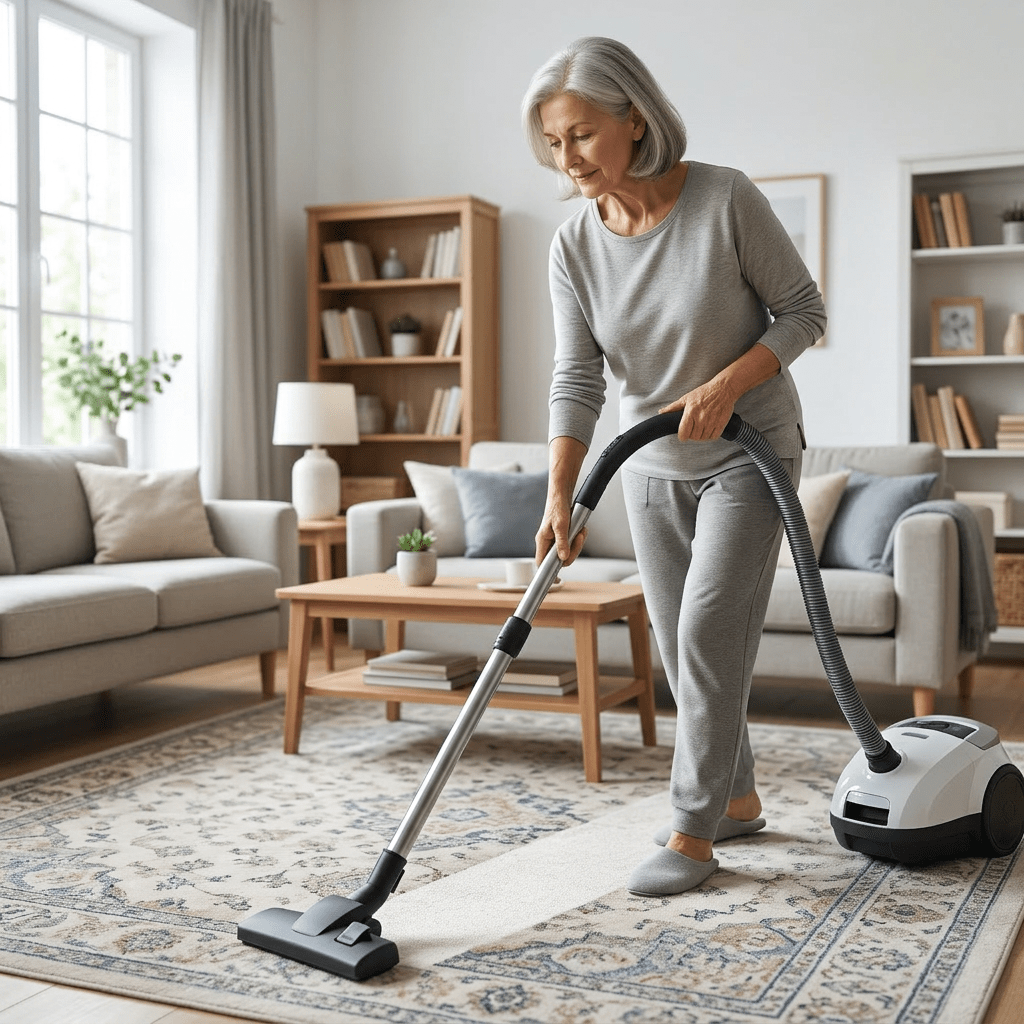
Active adults over 55 often notice patterns of physical strain showing up in work, recreational sports, and daily life. These movement challenges have something in common: the body may not be moving and supporting itself as efficiently as it once did. One area that plays an important role in restoring efficiency is the core, since it supports posture, balance, stability and movement. OR Many movement problems people notice at work, during daily activities, or while playing sports are related to strength, mobility, balance, posture, and movement habits. My classes, personal training, and exercise videos are designed to help active adults stay strong, move well, and remain active.
Common Movement Challenges after 55
Everyday activities become more difficult when the core muscles are weak.
Examples of preventive exercises that keep the core strong: Bird Dog, Planks, Dying Bug, Bridges, Neutral Spine
WORK
Work Activity: Prolonged Sitting or Standing
Occupations: Doctors, Dentists, Nurses, Attorneys, Writers, Executives
Outcome/Result: Low backache, Neck strain, Reduced mobility
SPORTS
Sport Activity: Golf, Tennis, Pickleball
Participants: 55 and over
Outcomes: Falls, Fractures, Joint Pain, Low Back Pain, Shoulder Injuries,
DAILY LIFE
Daily Life Activity: Lifting groceries. Climbing stairs, Maintaining balance, Getting Up and Down from the floor. Bending and Reaching.
Outcomes: Daily Life Activities become harder. Everything takes more effort than it used to. Noticeable changes in balance.
What You Can Do Right Now- Small Changes Can Make A Big Difference
Train Your Core
Move often throughout the day
Take short movement breaks
Change positions more often
Stay physically active
Practice core exercises consistently
Include strength, mobility, and balance exercises in your routine, such as Planks, Bird Dog and Dying Bug
Practice activities that improve core strength
Stay physically active in ways you enjoy and can do regularly
The goal is not perfection. Consistent movement over time is what helps most people maintain strength, mobility, and confidence in work, sports and daily activities.
Take Movement Breaks
A few minutes of movement can help reduce stiffness.
Train Your Core
Exercises such as Bird Dog, Dead Bug, and Planks strengthens core muscles. A strong core supports everyday movement.
Improve Balance
Practice exercises that improve your balance.
Maintain Flexibility
Exercises such as Bird Dog, Dying Bug, Bridges, and Planks can help support everyday movement.
Improve Balance
Balance exercises can help you stay confident and steady during everyday activities.
Maintain Flexibility
Regular stretching can help make reaching, bending, and turning feel easier.
Stay Physically Active
Consistent activity helps support strength, mobility, and overall function.
Change Positions Frequently
Avoid staying in the same position for long periods whenever possible.
Use Your Full Range of Motion
Moving your joints through their available range can help reduce feelings of stiffness.
Strengthen Everyday Movements
Exercises that mimic daily activities can help make common tasks feel easier.
Pay Attention to Posture
Good posture can help your body move more efficiently throughout the day.
Build Strength Gradually
Small improvements in strength can make a noticeable difference in daily activities.
Keep Moving Throughout the Day
Short bouts of movement often add up to significant benefits over time.
Practice Functional Movements
Exercises that support lifting, reaching, bending, and carrying can help maintain independence.
Support Spinal Health
Core strength and mobility exercises can help support comfortable movement and posture.
Improve Movement Confidence
A few minutes of exercise several times per week is often more effective than occasional intense workouts.
Make Exercise a Habit
Simple routines are often easier to maintain than complicated programs.
Move more frequently throughout the day
• Avoid staying in one position for long periods
• Include strength, mobility, and balance exercises in your routine such as Planks, Bird Dog, and Dying Bug
• Practice activities that improve core strength and movement awareness
• Stay physically active in ways you enjoy and can do consistently
The goal is not perfection. Consistent movement over time is what helps most people maintain strength, mobility, and confidence in everyday activities.
CTAs
NOTES: Exercise program is to strengthen the core. The reason to strengthen the core is preventive.Prevention of poor posture, spinal instability, chronic backache, sports injuries, dependency, disc degeneration. The health effects of poor posture: Neck and shoulder strain, back pain, neck pain, joint damage. from spine info doc in bus mktg docs.
- Getting up from a chair takes more effort.
- Carrying grocery bags makes you feel tired.
- Bending down has become much harder.
- Getting down on the floor is becoming more difficult.
- You feel less stable getting up from the floor.
KEYWORDS TO FIND ARTICLE ON DAILY ACTIVITIES “Everyday Activities THAT are Harder With a Weak Core” use this to compile the Daily List
The situations listed below are common movement challenges that many adults encounter as they age. Some are related to work habits, some occur during everyday activities, and others become noticeable during recreational sports and exercise.
WHAT IS THE RELATIONSHIP BETWEEN THESE ITEMS AND WEAK CORE?
POSSIBLE PAGE TITLES: How Core Strength Supports Everyday Movement
DESIGN ELEMENTS: Black cover block. Featured Image. Vectors where needed to illustrate daily strains. CTA buttons. LOGO, HORIZ RED LINES.
Move Better
Move Better at Home, Work & Play
Core strength training can help support how you move at work, in daily life, and in recreational sports. Do any of these movement challenges sound familiar? Visit the Exercise Library to see demonstrations of core-strengthening exercises that support healthy back, and more fill this in……that support your everyday movement.
While the specific experience is different for everyone, many of these activities rely on strength, balance, mobility, coordination, and core support.
Over the years, I’ve noticed that people don’t always talk about the movement challenges they experience in daily life. They may not mention difficulty getting off the floor, climbing stairs, carrying groceries, or feeling stiff after a long day.
What I often notice first is how they move. Movement patterns can provide clues about strength, balance, mobility, coordination, and stability. While I don’t always know the reason a movement pattern developed, it can help identify areas where improvement may be possible.
That’s one reason I place so much emphasis on core strength, movement quality, balance, and mobility. These qualities influence how we move at work, in daily life, and during recreational activities.
META DESCRIPTION: Learn how core strength, balance, mobility, and movement training can support everyday activities, work demands, and recreational sports.
USE INTERNAL LINKS TO OTHER PAGES
CHECKLIST ITEMS
- Your golf swing feels more restricted
- ☐ You need more time to warm up before activity
- ☐ Your body feels less responsive during sports
- Carrying groceries feel more tiring
- Getting off the floor takes more effort
- Golf swing feels more restricted
WORK LIFE CHECKLIST
Do any of these seem familair?
- Your golf swing feels more restricted
- ☐ You need more time to warm up before activity
- ☐ Your body feels less responsive during sports
- ☐ You find yourself shifting positions frequently
- ☐ Sitting for long periods leaves you feeling sluggish
- ☐ Good posture becomes harder to maintain as the day goes on
- ☐ You feel physically tired even though your work is not physically demanding
- ☐ Standing all day leaves your legs feeling heavy
- ☐ You feel less mobile after a long workda
DAILY LIFE CHECKLIST
Do any of these sound familiar? You may recognize some of these situations.
Your golf swing feels more restricted
☐ You need more time to warm up before activity
☐ Your body feels less responsive during sports
Your golf swing feels more restricted
☐ Getting down to the floor feels less comfortable
☐ Getting back up from the floor feels challenging
☐ Getting up from a kneeling position takes more effort
☐ Bending to pick something up feels less smooth
☐ Morning stiffness lasts longer than it used to
☐ Household chores feel more physically demanding
☐ You avoid certain movements because they feel difficult
☐ Your balance feels less reliable than it once did
RECREATIONAL SPORTS CHECKLIST
Do any of these sound familiar?
- Your golf swing feels more restricted
- ☐ You need more time to warm up before activity
- ☐ Your body feels less responsive during sports
- ☐ Rotational movements feel limited
- ☐ Tennis or pickleball movements feel slower
- ☐ Quick direction changes feel more difficult
- ☐ You feel stiffer after recreational activities
- ☐ Balance feels less steady during sports
- ☐ You don’t move as freely as you once did
- ☐ Recovery takes longer after activity
- ☐ You feel less confident in your athletic movements
- ☐ Sports feel more physically demanding than they used to
If you checked several of these items, you’re not alone. Many of the movement challenges people notice at work, during daily activities, or while participating in recreational sports have something in common: the body may not be moving and supporting itself as efficiently as it once did.
One area that plays an important role is the core. The core is more than just the abdominal muscles. It includes the muscles of the abdomen, back, hips, and pelvis that work together to help support posture, balance, stability, and movement.
When the core lacks strength or endurance, everyday movements may require more effort. Activities such as sitting, standing, lifting, carrying, reaching, bending, rotating, and changing direction can begin to feel less comfortable or less efficient.
The good news is that movement can be improved at any age. Regular exercise that develops core strength, mobility, balance, and movement awareness can help support how you move at work, in daily life, and during recreational activities.
The goal is not to move like you did twenty years ago. The goal is to move as well as possible today and continue doing the activities you enjoy for years to come.
WHAT YOU CAN DO RIGHT NOW – small changes can make a big difference
Move more frequently throughout the day
• Avoid staying in one position for long periods
• Include strength, mobility, and balance exercises in your routine
• Practice activities that improve core strength and movement awareness
• Stay physically active in ways you enjoy and can do consistently
The goal is not perfection. Consistent movement over time is what helps most people maintain strength, mobility, and confidence in everyday activities.
CTAs
OPTION ONE (educational cta) – want to learn more: Explore the Core Exercise Videos page to see examples of the movement principles discussed above. The videos demonstrate exercises that can help improve core strength, mobility, balance, and movement awareness. Buttons: Core Exercise Videos, Classes, Personal Training.
OPTION TWO (practical cta) – ready to improve the way you move? Whether you’re looking for guided group classes, individualized training, or simply want to learn more about core-focused movement, there are several ways to get started. Buttons: Personal Training Information, View Core Exercise Videos, Learn About Classes
OPTION THREE: (your voice) – What Next?
If some of the situations on this page sound familiar, there are several ways to learn more.
• Explore the Core Exercise Videos page to see movement demonstrations.
• Learn more about my classes, which focus on core strength, mobility, balance, and movement quality.
• Personal training provides a more individualized approach for people who want focused guidance.
Choose the option that best fits your interests and goals.
Buttons: Classes, PT, Exercise Videos
4 WAYS TO DESCRIBE THE EX VIDEO PAGE: HOW TO DESCRIBE THE EXERCISE VID PAGE: 1, Free Resource: Visit the Core Exercise Videos page to see movement demonstrations and learn more about the principles discussed on this page. 2, Looking for practical examples? The Core Exercise Videos page is available as a free educational resource. 3. Explore the Core Exercise Videos page for free demonstrations of exercises that support core strength, mobility, balance, and movement quality. 4. Free Educational Resource: Core Exercise Videos
RECOMMENDED DESCRIPTION: Free Educational Resource: Explore the Core Exercise Videos page for demonstrations of exercises that support core strength, mobility, balance, and movement quality. BUTTON: Core Exercise Videos
Move More Often
Change positions throughout the day.
Take Movement Breaks
A few minutes of movement can help reduce stiffness.
Walk Regularly
Walking is one of the simplest ways to stay active.
Train Your Core
Exercises such as Bird Dog, Dead Bug, Bridges, and Planks can help support everyday move
Improve Balance
Balance exercises can help you stay confident and steady during everyday activities.
Maintain Flexibility
Regular stretching can help make reaching, bending, and turning feel easier.
Stay Physically Active
Consistent activity helps support strength, mobility, and overall function.
Change Positions Frequently
Avoid staying in the same position for long periods whenever possible.
Use Your Full Range of Motion
Moving your joints through their available range can help reduce feelings of stiffness.
Strengthen Everyday Movements
Exercises that mimic daily activities can help make common tasks feel easier.
Pay Attention to Posture
Good posture can help your body move more efficiently throughout the day.
Build Strength Gradually
Small improvements in strength can make a noticeable difference in daily activities.
Keep Moving Throughout the Day
Short bouts of movement often add up to significant benefits over time.
Practice Functional Movements
Exercises that support lifting, reaching, bending, and carrying can help maintain independence.
Support Spinal Health
Core strength and mobility exercises can help support comfortable movement and posture.
Improve Movement Confidence
Regular exercise can help you feel more comfortable with everyday physical activities.
Stay Consistent
A few minutes of exercise several times per week is often more effective than occasional intense workouts.
Make Exercise a Habit
Simple routines are often easier to maintain than complicated programs.
Focus on Quality Movement
How you move is often just as important as how much you move.
Listen to Your Body
Pay attention to stiffness, balance changes, and movement limitations before they become larger problems.
POOR POSTURE OUTCOMES – see excellent article below. Read for more details.
- Chronic pain syndromes: Persistent muscle fatigue and joint stress can lead to chronic musculoskeletal pain pennspineandortho.com.
- Reduced mobility and quality of life: Postural deformities and muscle weakness can limit physical activity and independence pennspineandortho.com.
- Increased injury risk: Altered biomechanics make the body more vulnerable to strains and sprains Cleveland Clinic.
“Effects of Bad Posture on the Muscular and Skeletal Systems” http://www.penn spine and ortho.com
Outcomes: Chronic back pain, Nerve compression, Neck pain, Joint problems, Spinal misalignment, Rounded shoulders, Pot belly, Overworked neck and back muscles (when the body is misaligned certain muscles must work harder to compensate leading to muscle imbalances, some muscles become tight and fatigued, while others weaken from underuse. Over time, this can lead to:
- Chronic muscle tension and stiffness cyvigor.com
- Reduced blood flow to muscles, causing fatigue and stiffness ucspinecare.com
- Nerve compression in the neck or back, leading to headaches, tingling, or radiating pain ucspinecare.com+1
- Increased pressure on discs and joints, accelerating wear and tear ucspinecare.com+1
Common symptoms include neck pain, shoulder discomfort, lower back pain, headaches, and reduced range of motion Mayo Clinic+1.
THURSDAY JUNE 11 – CHAT put this line above the images
Many everyday movement challenges are linked to reduced core strength, balance, flexibility, and overall movement capacity.

