Low Back Pain After 50: Strengthen Your Core To Alleviate Low Back Pain


Low Back Pain Series: Non-Medical Causes, Prevention and Remedies

Before and After Posture Corrective Exercises

Poor Posture Due To Weak Core Muscles

Having a poor posture due to weakness in the core can lead to low back pain. A general way of looking at the core muscles is the area from your hips to your neck. That includes your abs, back, butt and hips.

How To Remedy Weak Core Muscles? Make your abdominal muscles and your back strong by doing posture corrective exercises. Several ways to go about it are listed below.

Methods To Strengthen Your Core

  • Yoga Poses
  • Pilates Exercises
  • Abdominal Curls
  • Back Exercises
  • Balance Exercises
  • Planks

Modifying Exercises

When an exercise is too difficult an alternative is the modified version. As you get stronger you’ll be able to do the full exercise.


Related posts Low Back Pain After 50 and How To Fix It, Strengthen Your Core To Alleviate Low Back Pain, Post Activity Muscle Strain, Low Back Pain After 50: Why Your Mattress Matters

Need Help? Contact Irene Pastore To Start Your After 50 Fitness Journey. Fill Out The Contact Form.

Low Back Pain After 50 and How To Fix It


Low Back Pain Series: Causes, Prevention and Remedies

  • Poor posture due to weak core muscles
  • Muscle strain after an activity
  • Sleeping in a prone position
  • Unsupportive mattress
  • Too much sitting
  • Excess weight
  • Sedentary lifestyle
  • Improper lifting

Related posts Low Back Pain After 50 and How To Fix It, Strengthen Your Core To Alleviate Low Back Pain, Post Activity Muscle Strain, Low Back Pain After 50: Why Your Mattress Matters

Need Help? Contact Irene Pastore To Start Your After 50 Fitness Journey. Fill Out The Contact Form.

How Seniors Can Monitor Heart Rate Effectively


Seniors can improve their heart health by learning how to monitor their heart rate during exercise. There are several ways that ensure you’re within your target training zone. Two easy methods are discussed in this post. Click the links below this article for more information on this subject.

Rating of Perceived Exertion

Use the Rate of Perceived Exertion Chart to determine how hard your heart is working during exercise. RPE measures your exertion on a scale from 1 to 10 based on how you feel. It is often used in combination with wearable heart rate trackers. By using RPE you are self-monitoring the level of difficulty of your exercise.

The Talk Test

The Talk Test Is an aerobic test that measures your ability to talk during physical activity at various levels of intensity. Intensity refers to the level of difficulty. There are three levels of intensity during the Talk Test: Low, Moderate and High. These levels correspond to the RPE as Low 3-4, Moderate 5-6, and High 8-9.


Related Posts

Understanding Your Heart Rate For Safe and Effective Exercise


Tracking your heart rate during exercise prevents you from overworking your heart. Your doctor may have recommended a training range for your heart based on your age and health.

In today’s post you’ll learn how to how to calculate your Maximum Heart Rate (MHR) and how to use it to determine how hard you’re working during exercise.

This concept is referred to as exercise intensity. In general, the higher the heart rate during exercise, the higher the exercise intensity. There are three levels of cardio exercise intensity: Low, Moderate and Vigorous.

Maximum Heart Rate Formula

The Maximum Heart Rate Formula is 220 – Your Age. If your age is 65, your Maximum Heart Rate (MHR) is 155. If your age is 55, your MHR is 165.

Exercise Intensity Levels

  • Low Intensity is 40% to 50% of your MHR
  • Moderate Intensity is 50% to 70% of your MHR
  • Vigorous Intensity is 70% to 85% of your MHR

The Karvonen Formula

The Karvonen formula is a simple formula that is used to calculate your Target Heart Rate (THR) during exercise. The THR is a percentage of your Maximum Heart Rate.

  • Maximum Heart Rate (MHR) is 220 – Your Age
  • Resting Heart Rate (RHR) is your heart rate at rest
  • Heart Rate Reserve (HRR) is your MHR – RHR
  • Karvonen Formula is your HRR x Training % + RHR

Example of a 65 year old with a Resting Heart Rate of 72 and a Maximum Heart Rate of 155. The Training Heart Rate Zone for this individual is 113 to 142 Beats Per Minute (BPM).

MHR = 155

RHR = 72

HRR = 83

83 x 50% + 72 = 113 Beats Per Minute (BPM)

83 x .85% + 72 = 142 BPM

How To Monitor Your Heart Training Zone During Exercise

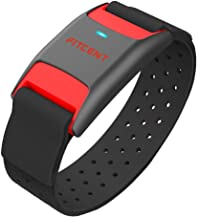
The easiest method to monitor your heart rate during exercise is to wear a heart rate monitor either on your wrist or around your chest. The wearable electronic device alerts you when you’re moving outside your Training Zone. This is a more convenient method of tracking your heart rate.

Monday’s post will discuss the RPE Method of monitoring exercise intensity.


Related Post