Exercise of the Month: March 2013

SCISSORS ON THE BALL

Exercise Type: Core Stabilization
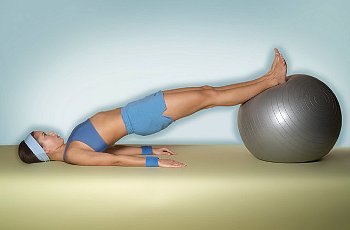
Scissors On The Ball Position One

Level: Advanced

Equipment: Exercise Ball, Sticky Mat, Athletic Shoes optional.

Muscles Worked: Gluteals, Hamstrings, Quadriceps, Hip Flexors, Abdominals

How To Perform Scissors On The Ball

  • Place a sticky mat on the floor.  Place the exercise in front of your mat.
  • Remove your shoes.  Lie on your back on the sticky mat, with arms at your sides, palms down.
  • Place both legs on the ball.
  • Take one deep breath.  Exhale fully as you lift up off the mat, balancing on the ball, as shown in Position One.  

    Scissors On The BallPosition Two
    Scissors On The Ball
    Position Two
  • Take another deep breath.  Exhale fully as you lift your right leg off the ball as shown in Position Two.  Slowly bring your leg down onto the ball, and change sides.
  • Do 5 to 8 repetitions.

Modifications 

  • The closer the ball to your feet, the harder the exercise.  To make the exercise easier, place your calves on the ball, instead of your ankles.
  • Lift leg a few inches off the ball, instead of 90 degree angle.  Only lift your leg as far as you can maintain a steady balance.
  • The exercise is easier if you wear athletic shoes, rather than doing the exercise with bare feet.
  • If raising one leg is too difficult, remain in position one, and then lower your back to the mat.
  • Use a smaller ball if you’re experiencing difficulty balancing.

Correct Technique

  • If you wobble, modify the exercise.
  • Maintain level hips.  As you lift your leg, don’t allow your hip to drop.
  • Avoid sagging.

Cautions

  • Don’t overdo it!  Your legs can slide off the ball, if you’re not careful.
  • Perform this exercise in an area free of obstacles, such as furniture.
  • Use the correct size stability ball.  The smaller the ball, the easier it will be to do the exercise.  See my post on selecting the correct size stabiity ball.

Copyright 2013 Irene Pastore, and Blue Moon Personal Training
10 Good Reasons To Buy A Yoga Mat

Would you consider wearing someone else’s dirty socks?  Probably not.  Then why would you stand, sit, or lie down on a communal mat at your local gym, or Yoga studio?

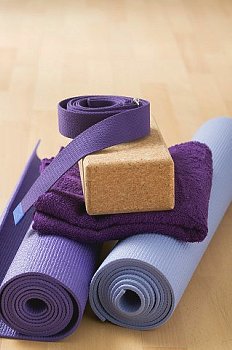
Yoga Mats, Belts, Towel, and Block
  1. Mats collect sweat, dirt and dust.  In a very busy studio, or health club, it’s not likely that Yoga mats are cleaned on a regular basis.
  2. The surface of a borrowed, or rental, is “one size fits all”.    You might slide all over the mat because the texture isn’t sticky enough, or maybe it’s not long enough for your height.  You may need a thicker mat, if your back or knees feel uncomfortable.
  3. You can get warts  from a communal mat.
  4. You can get athletes foot from a communal mat.
  5. A mat, block, belt or foam wedges are personal pieces of equipment, bearing your own energy.  Yes, inanimate objects collect the energy of their owner.  Some people carry energy that isn’t healthy.
  6. All mats are not created equal.  When you purchase your own mat, you can select the size, texture, color and thickness, that’s just right for you.
  7. Using your own mat enhances your practise because you’ve selected the right texture, thickness and size.
  8. Using a communal mat is like wearing a pair of  communal socks or shoes.  If you’re repulsed by the thought of wearing communal dirty, then you should feel the same way about communal Yoga mats.
  9. Cleaning your own mat is easier than you think.  You can put it in a washing machine in cold water for a very thorough cleaning.  You can also buy a mat cleaner for a quick clean up right after class.

    Yoga Mat
    Keep Your Yoga Mat Clean
  10. Some mats are chemically treated to prevent the growth of bacteria and viruses.  If you’re chemically sensitive and are using a communal mat, you won’t know the difference.

Communal Yoga Mats: Beware of Germs, New York Times, July 27, 2006

Foot Fungus Alert: Yoga Journal

Quick Tip: How To Clean A Yoga Mat: Blue Moon Personal Training

Copyright 2013 Irene Pastore, and Blue Moon Personal Training

Defining Sugar: Added, Natural, and Artificial

PACKETS OF NATURAL
AND ARTIFICIAL SWEETENERS

This post will help you understand the difference between added sugar, artificial sugar, and natural sugar.

Natural Sugar is a food derived sweetener, such as: Sucrose, Confectioner’s Sugar, Brown Sugar, Raw Sugar aka Turbinado Sugar, Succanat, Molasses, Maple Syrup, Maple Sugar, Honey, Raw Honey, Agave Syrup, Brown Rice Syrup, Malted Barley Syrup, Date Sugar, Corn Syrup, Corn Syrup Solids, Dextrose, Lactose, Maltose Syrup, Fructose, Xylitol, Sorbitol, Stevia, Cane Juice, Dehydrated Cane Juice, Evaporated Cane Juice, Fruit Juice Concentrate, Coconut Sugar, Coconut Syrup, Palm Sugar, Sorghum Syrup, Beet Sugar.

Added Natural Sugar: is an ingredient in canned, frozen, and bottled food.  Food labels indicate, “naturally sweetened.”

Artificial Sugar is a chemically derived sweetener, such as: Equal, Sweet ‘N Low, Splenda, Nutra Sweet, Sugar Twin, Sunett, Sweet One, and Saccharin.

Added Artificial Sugar is an ingredient added to packaged, canned, frozen, and bottled food.  Food labels indicate, “artifically sweetened.”

Copyright 2013 Irene Pastore, and Blue Moon Personal Training.  

Stevia: Healthy Sugar Substitute

WHAT IS STEVIA?

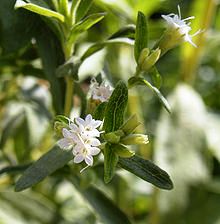
Stevia is a tropical plant bearing leaves that are very sweet.  Growing primarily in Paraguay and Brazil, stevia is a wild herb in the chrysanthemum family.  Stevia has been used in South America for hundreds of years as a natural sweetener.

STEVIA PLANT
STEVIA PLANT

WHY USE STEVIA INSTEAD OF SUCROSE?

There are no calories in stevia, and yet, it is much sweeter than sucrose (white sugar). Stevia doesn’t raise blood sugar.  It provides an alternative to people on low carbohydrate diets, diabetics, and as a weight-loss aide.  Current research indicates that stevia does not harm teeth.

If you’re a diabetic, and are in doubt about using stevia, check with your health-care practitioner.  If your doctor is unfamiliar with stevia, do your own research, and bring it to their attention.

HOW DO I USE STEVIA?

Stevia is used just like sucrose (white sugar).  Since it’s sweeter than white sugar, you’ll need to adjust your recipe, and use less.  Go to stevia.com for recipes about breakfast foods, beverages, breads and muffins, desserts, jams and jellies, salads and soups.

WHERE CAN I BUY STEVIA? 

STEVIA POWDER
STEVIA POWDER

Stevia is sold in powder, liquid, or handy packets.  Whole Foods Markets, and most health food stores sell stevia  Here are some online stevia shopping websites: Stevia.com, HealthyShoppingNetwork.com, and Amazon.com.

Copyright 2013 Irene Pastore, and Blue Moon Personal Training

Xylitol: A Healthy Sugar Subsitute

WHAT IS XYLITOL?

XYLITOL IN A 2.5 LB. BAG

Xylitol is a nutritive sugar found in the fibers of many fruits and vegetables.  The most common sources of extraction are corn cobs, and trees.  Since it’s plant-derived, xylitol isn’t classified as an artificial sweetener.

Xylitol looks, and tastes just like sucrose (white sugar).  It’s used in baking, and cooking.  You can sweeten your coffee, tea or cocoa with it.  Measurement equivalent is the same as table sugar.

WHY USE XYLITOL INSTEAD OF SUCROSE?

Xylitol has health benefits.  It prevents tooth decay, and nasal infections, and can be used safely by diabetics.  There are about 40 percent fewer carbohydrates in xylitol, and about 75 percent fewer carbohydrates, than sucrose (white sugar).  If you are a diabetic, it’s always best to check with your health care practitioner about sugar substitutes.

Xylitol is a food, not a drug.  Therefore, food packaging labels carry no claims.  If you’re interested in learning more about the benefits of xylitol, visit Xylitol.org, and WebMD.  Xylitol sweetener is usually sold in bags.  You can buy it at Amazon.com, at   XylitolUSA.com.   Xylitol.org provides many links to other product sites.

XYLITOL IS NOT SAFE FOR CATS AND DOGS

Xylitol is safe for humans, but not for cats and dogs.  Never feed your cat or dog anything containing xylitol.  Even in small amounts, it is toxic, and can be fatal.  An article appearing in the July 2012 issue of The Seattle Times, explains why.

Copyright 2013 Irene Pastore, and Blue Moon Personal Training
 

32 Types of Hidden Sugar In Packaged Food

READ LABELS
KNOW WHAT YOU’RE EATING

Sugar is added to most packaged food.  Learning the various names for natural, processed sugars, will help you know what to look for when you read food labels. The list identifies natural sugars. Natural sugars  are derived from food, rather than chemicals.

32 TYPES OF ADDED NATURAL SUGAR IN PACKAGED FOOD

Agave Syrup, Beet Sugar, Brown Rice Syrup, Brown Sugar, Cane Juice, Confectioner’s Sugar, Coconut Sugar, Corn Syrup, Corn Syrup Solids, Date Sugar, Dextrose, Dehydrated Cane Juice, Evaporated Cane Juice, Fruit Juice Concentrate, Fructose, Honey, Lactose, Malted Barley Syrup, Maltose Syrup, Maple Syrup, Molasses, Palm Sugar, Raw Honey, Sorbitol, Sorghum Syrup, Stevia, Sucrose, Succanat, Turbinado Sugar (aka Raw Sugar), Xylitol.

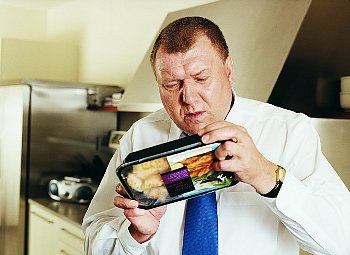
If you think that added natural sugar makes you  addicted, i.e., you can’t stop eating even if you’re full, then it might be a good idea to cut back, or cut out eating foods that contain added natural sugar.  Lowering or eliminating added  sugar reduces calories, and will you help you maintain a healthy weight.

Copyright 2013 Irene Pastore, and Blue Moon Personal Training.