Core Exercise For Equestrians

Back Strengthening Exercise

With the exception of a few urban areas, we live in a country that encourages sitting, because our towns and cities are planned around the automobile.

We sit at the computer, in front of the TV,  on the job, at the movies, dining out, and commuting to work.  .

Hamstring Stretch

In many cities and towns, sidewalks are inadequate for pedestrians,  making the car an absolute necessity, even for short, walkable errands.

Prolonged sitting weakens our muscles, makes us lethargic, creates a weak core, which in turn, develops poor posture. Medical doctors consider sitting to be the new smoking.

Do you have a job where you’re sitting most of the day?   Do you have chronic low back pain?  Does your neck feel stiff?  Are your muscles so sore you can’t sit down? Is the time spent riding your horse not as enjoyable as you’d like it to be?

Targeted exercise provides solutions to remedy these problems.

EQUESTRIAN FITNESS AND CORE MUSCLES

Yoga Warrior 2 Hip Stretch

The muscles of the abs, back, pelvis and hips, make up the core. Strengthening these muscles is important, because the core stabilizes the spine, and  protects it from injury,

While you’re moving, the core controls the position and motion of the torso over the pelvis.  A strong core improves sports performance, and maintains healthy posture.

SOLUTIONS

Pilates Ab Exercise

Targeted exercise provides solutions to help you get rid of muscular tension, and weakness, develop better posture on and off the horse, and makes riding more effective.

PILATES EXERCISE

Pilates Mat and Reformer exercises are designed to make your core muscles strong.

If you’re not inclined towards Pilates, no worries, you can opt in to a fitness-based core exercise routine, using specialized core equipment to get the job done.  Core exercises can also be performed without any equipment.

YOGA CORE EXERCISE

If you’re a Yoga fan, there are many poses that will strengthen your core muscles, stretch your Psoas, Back, and Hamstrings.

As you can see, there are many ways to stretch and strengthen your muscles.  Here are a few suggestions.

Stretch the Psoas Muscle because this inner hip muscle tightens up when you do alot of sitting.   Stretch your Back to release tension in tight muscles.
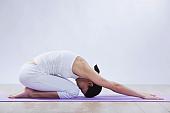
Yoga Back Stretch

The Hamstrings are the muscles of the posterior thigh.  Theses muscles tighten up from excessive sitting.  If you frequently do stair climbing, or cycling ,you should be stretching your Hamstrings on a regular basis.

Strengthen ;your Back and Abdominal Muscles, because these muscles work as a team to keep your posture healthy, and your spine well-supported.

Copyright 2015 Irene Pastore and Tour De Core Personal Training 

RELATED POSTS

The Lunge Stretch For Tight Hips

Stretching 101

Basic Hamstring Stretches


Walking Backward On A Treadmill

TV ANNOUNCER TAKING A FALL ON A TREADMILL

This is another post about fitness accidents.  Only this time, it was a tv stunt gone bad.

Did you ever notice someone at the gym walking backwards on a treadmill?  Did you wonder whether they were into a new, trendy form of cardio exercise, trying to break the monotony, or maybe you thought  they were doing something risky?

TREADMILL FALL

This is another post about fitness accidents. Only this time, it was a tv stunt gone bad.

On January 15, the Price Is Right announcer, George Gray, fell while walking backwards on a treadmill.

He held his script in one hand, and  his microphone in the other. While reading his script, he took a quick fall landing on his back. He managed to get up, gain composure,  and continue the show.  He was lucky he didn’t suffer a head injury.

TREADMILL FALL

Treadmills are made for improving heart health.  If you enjoy using a treadmill, use it safely.

  • Walking backwards on a treadmill, increases your chances of falling.  
  • Walking backward as a land exercise, is used to improve balance, not heart health.

It only takes a split second to be thrown off balance, landing on your head, or your back. At the very least you can strain muscles, which, depending on the severity, can take weeks to heal.

Muscle strains can be very painful.  At worst, serious head injuries, lacerations, and broken bones. By all means, don’t use it for an entertainment stunt.

Copyright 2015 Irene Pastore and Tour De Core Personal Training


Disabled Dog Saves Handicapped Boy

The Story of Owen and Haatchi

This post is for animal lovers who enjoy a sweet story about the human-animal bond, and how Owen Howkins, a handicapped 9 year old boys’ life was turned, around with the help of his disabled, 3-legged canine friend, Haatchi.

Owen was born with  Schwartz-Jampel Syndrom, a rare, painful condition, that causes muscles to permanently contract, resulting in severe muscle stiffness.

Owen y Haatchi 2
Owen and his dog Haatchi

Haatchi, an Anatolian Shepherd was abandoned on railroad tracks, when he was 5 months old.  He was hit by a train, and left to die.

The dog was rescued, brought to a local animal shelter, and then adopted by Owen’s parents.

Owen states “I didn’t really meet many others with disabilities and felt like the odd one out, which made me really sad. But when I saw Haatchi , and saw how strong he was, even though he only had three legs, I became stronger myself. I love him so much.”

I’ve followed this story on You Tube, and decided to post it on my blog.  If you go to You Tube and search for Owen and Haatchi, you’ll find many videos of their continuing story there.

Copyright 2015 Irene Pastore and Tour De Core Personal Training

Brooklyn Man Dies Hiking Alone in Mexico

Fatal hiking fall.

Exercise shouldn’t kill you.  Most people would agree with that. But the reality is that exercise does kill, when you’re not prepared, don’t understand the risks, or your fitness level isn’t up to the task.

MOTHER NATURE DOESN’T FORGIVE

If you’re out in the wilderness, on a rocky hillside, riding the rapids, or up on a mountain, you need a plan, and know what you’re doing, because the mountains don’t care, and hikes can turn deadly.

Get a grip. Wear appropriate footwear. Obey trail signs and don’t wander off.

Hiking alone in Mexico, 25 year-old Hari Simran Singh Khalsa of Brooklyn, New York, was found dead on January 2.  Missing since December 30, his body was found in a ravine near the town of Tepoztlan.

Khalsa told his wife that he planned to go on a short hike, and in a later message told her he walked further than intended, and also told friends that he climbed too high onto another mountain by mistake.

His family said he died of head injuries from a fall over rough terrain, in the Tepozteco Mountains.

In his last text message to a friend, he said that he was on top of a very high mountain, and not sure how to get down.  He had a liter (about 4 cups) of water and a bag of trail mix.

Study maps. Know where you’re going, and what to expect.

10 HIKING TIPS TO PREVENT ACCIDENTS

  1. Get in shape.  Strengthen your core.
  2. Learn about the terrain.
  3. Check the weather forecast before you set out.
  4. Wear proper clothing, and footwear for the anticipated weather conditions, and terrain..
  5. Carry enough water and food for your trip.
  6. Don’t hike alone.
  7. As you ascend, make note of your ability to descend.  If you think you won’t be able to navigate the terrain safely on the way down, turn around and go back.
  8. Study maps of the hiking trails before setting out on your trip.
  9. Keep in mind that in remote areas, your cell phone is useless.
  10. Know what type of wildlife you may encounter.

CORE STRENGTH MAY SAVE YOUR LIFE

A strong core prevents falls, by stabilizing your spinal muscles.  Instead of landing on your head, back, or knees, you’ll remain upright, whether you’re walking on icy pavement in a city street, or engaged in wilderness sports and recreation activities.

Here’s a list of related articles about outdoor recreation safety.

How To Exercise Your Core

Strong Core Muscles Can Save Your Life

How To Kill Yourself In A Kayak,

How To Prevent Hiking Accidents.

Copyright 2015 Irene Pastore and Tour De Core Personal Training


Senator Harry Reid’s Exercise Injury

Senator Harry Reid after his exercise accident.

This story is all over the internet, so I’ll just add my two cents. While Senator Harry Reid was exercising with an exercise band, it broke, hit his eye, causing him to lose his balance, and take a bad fall.  He hit his head on nearby equipment, breaking bones near his right eye.  He was also diagnosed with a concussion, and broken ribs.  As of today, medical reports say that he may lose vision in his right eye.

CAN AN EXERCISE BAND CAUSE BODILY INJURY?

Do not hold the band In front of your face.

Indeed it can.  In fact, any type of exercise equipment can cause injury if not used carefully.

Elastic bands seem innocuous, because they’re non-imposing, they don’t intimidate, they almost look like a child’s toy.

OLDER ADULTS AND EXERCISE BANDS

Senator Reid is 75 years old.  He was standing while exercising with an elastic band.

Either he pulled the band beyond a safe range, causing it to snap, or the band may have been overused, and should have been replaced.  He then lost his balance, and fell head first onto exercise equipment in his home gym.

Persons over 65 should use great care while exercising to prevent accidents.  Loss of balance is more likely  in an older adult.

HOW NOT TO USE AN EXERCISE BAND

  • Do not pull the band beyond its’ capacity, causing it to break.

    Do not stretch the band beyond its’s limits.
  • Don’t use the band while standing, if you think you might lose your balance during exercise..
  • Don’t hold the band near your face, especially close to your eyes.  If it breaks, you can suffer an eye injury.
  • Don’t use the band if you have long fingernails, because they can puncture the band with holes, causing the band to break while in use.
  • Don’t wear jewelry while using the band,  to avoid puncturing the band.
  • Don’t let your kids play with the bands.  Elastic bands are not toys.
  • Don’t allow distractions while you’re exercising with bands, and all other equipment.  Stay focused on what you’re doing.
  • Don’t store your exercise bands near heat or sun.  Store them in a cool, dry place.
  • Keep the bands away from dogs and cats to prevent injury to your animals.
  • Replace bands after extended use.

Copyright 2015 Irene Pastore, and Tour de Core Personal Training.

Dog Buddy Workouts I

Trendy Exercise Gets Dogs and Owners Off The Couch

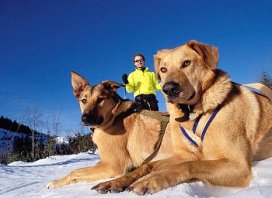
One of the newest trends in fitness is the buddy workout with your dog.  This post will give you a few basics on how to get started.  This is the first article in a series, so stay tuned.

Cardio Exercise For You and Your Dog

  • Jogging for you and your dog.
  • Swimming for you and your dog.
  • Agility Training for you and your dog.  
  • Bicycling for you.  Jogging for your dog.
  • Rollerblading for you.  Jogging for your dog.
  • Cross Country Skiing for you.  Jogging for your dog.

How To Train

You’ll need to monitor your dog’s exertion, just as you would your own. Start with short distances first. Gradually increase the time. If your dog shows signs of fatigue, or tags behind you, slow down and cut back.

What You Need To Do First

Check with your vet before starting your dog on an exercise routine.

Warnings

The health and well-being of your dog should be uppermost. Too much exercise, or the wrong way to exercise can injure your dog.

  • Constant leash pulling can damage your dog’s throat.
  • Too much exercise can result in blisters on your dog’s paw pads after a run, especially dogs with light colored pads.
  • Stiffness, soreness, and exhaustion are signs of too much exercise.
  • Large dogs are more prone to arthritis and hip dysplasia (an inherited degenerative condition that can cause painful arthritis, and crippling lameness).  Sustained jogging can be tough on their joints.  Swimming is a better alternative.  Get your vets advice on the best type of exercise.
  • Dogs and people don’t run the same. It is more common for a dog to run, stop and explore, and run again.  Take a short run for 10 minutes, take a break, and then try another short run.
  • Avoid running with your dog on hot days.  
  • Exercise in the shade, and out of the sun.
  • Exercise on grass or dirt roads to help avoid damaging your dog’s paw pads.
  • Sustained jogging or running isn’t recommended for young dogs whose 
  • bones haven’t formed.
  • Be sure your dog is trained properly if you do online skating or bicycling. Your dog should be trained to run beside you without pulling.

Paw Protection During Outdoor Exercise 

Keep your dog’s paw pads protected from injuries, and cold weather conditions.  Several companies manufacture and sell canine protective footwear products.  Here are a few suggestions: Muttluks.com, UltraPaws.com, Amazon.com.

Copyright 2014 Irene Pastore and TourDeCore.com