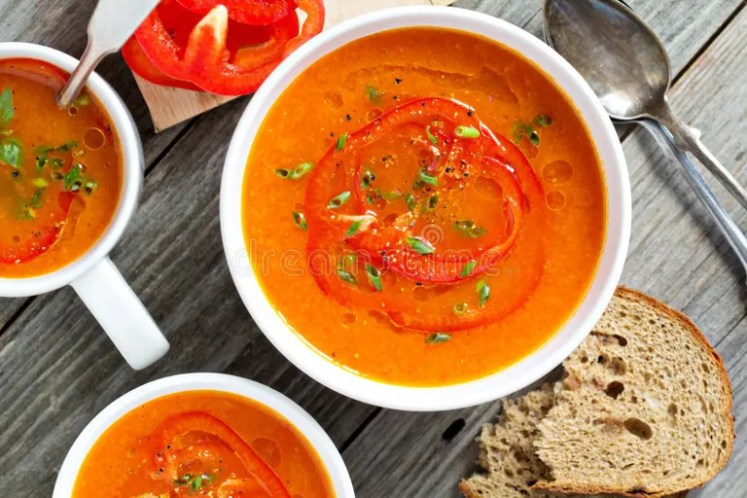
Roasted Red Bell Pepper Soup Recipe


Red Pepper Soup

Roasted Red Bell Pepper Soup Recipe

INGREDIENTS

  • 3 red bell peppers
  • 1 onion, chopped
  • 1 tablespoon minced garlic
  • 1 tablespoon olive oil
  • 2 (15 ounce) cans cannellini beans, drained and rinsed
  • 2 (14.5 ounce) cans chicken broth
  • salt and pepper to taste

DIRECTIONS

  • Preheat oven to broil.
  • Place the bell peppers on a baking sheet and broil on the top rack of the oven, using tongs to turn them as each side blackens. Place the blackened peppers in a paper bag, close tightly and allow them to cool for 20 to 30 minutes. Then peel the skin off the peppers and discard the stem and all the seeds. Chop the peppers and set aside.
  • In a large pot over medium heat, saute the onion and garlic in the oil for 5 minutes, or until onion is translucent. Now add the chopped, roasted red bell peppers and saute for 2 to 3 more minutes.
  • Next, add the chicken broth and the beans, stirring well. Using a blender, puree the soup in small batches and return to the pot over low heat for 5 minutes.

Recipe Source: AllRecipes.com
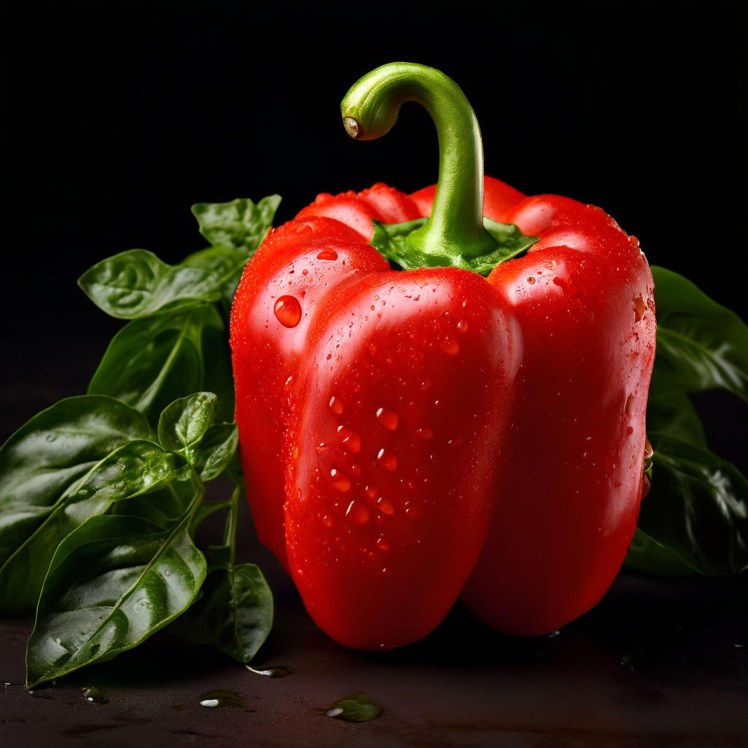
Why Red Bell Peppers Are Nutrient Powerhouses


Red Bell Pepper

What Are Red Bell Peppers?

Red bell peppers are vibrant, sweet-tasting vegetables that belong to the Capsicum annuum species. They start out as green bell peppers and gradually turn red as they fully ripen, which makes them sweeter and more nutrient-dense.

What Are The Health Benefits of Red Bell Peppers?

Red bell peppers are packed with nutrients and offer a variety of health benefits.

  • High in water content: Around 92% water.
  • Rich in vitamins:
  • Vitamin C: One medium red bell pepper provides nearly 190% of the daily recommended intake.
  • Vitamin A: Supports eye health and immune function.
  • Vitamin B6: Important for red blood cell formation.
  • Vitamin E & K: Essential for skin, muscle, and bone health.
  • Rich in antioxidants that help fight oxidative stress.
  • Contains carotenoids like capsanthin, lutein, and zeaxanthin, which help protect against blue light damage.
  • Provides fiber, which supports gut health.

How To Prepare Red Peppers?

  • Roasted: Roasting enhances their sweetness—great for soups, sauces, or as a pizza topping.
  • Grilled: Adds a smoky flavor, perfect for fajitas or Mediterranean dishes.
  • Stuffed: Fill them with rice, meat, or veggies for a hearty meal.
  • Sautéed: A quick way to add color and flavor to stir-fries, pasta, or omelets.
  • Pickled: Preserves their flavor for use in sandwiches or antipasto platters.

Why Americans Are Choosing Dental Care in Mexico


Many Americans are traveling to Mexico for dental care due to the significant cost savings and high-quality treatment options available. Here’s why this trend is growing.

Key Reasons for Dental Tourism in Mexico

  • Lower Costs – Dental procedures in Mexico can be 40% to 70% cheaper than in the U.S.. For example, an all-on-4 dental implant costs around $8,110 in Mexico, compared to $24,000 in the U.S.
  • Quality Care – Many Mexican dentists are board-certified and trained internationally, offering modern facilities and advanced procedures.
  • Convenient Locations – Border towns like Los Algodones and tourist destinations like Cancún cater specifically to dental tourists.
  • All-Inclusive Packages – Clinics offer bundled deals that include consultations, treatment, accommodations, and transportation, making the process seamless.
  • Short Wait Times – Unlike the U.S., where appointments can take weeks, Mexican clinics often provide same-day or next-day treatments.

Source: MedicalTourism.com, DentalVacation.com, CancunCosmeticDentistry.com


Creamy Tahini Dressing Recipe for Healthy Meals


Tahini Dressing Recipe

INGREDIENTS

  • 1/4 cup fresh lemon juice
  • 1 teaspoon honey
  • 1 clove garlic, mashed into a paste
  • 1/2 cup well-stirred tahini
  • 1/4 to 1/3 cup cold water
  • 1/4 teaspoon ground cumin
  • Pinch ground cayenne pepper
  • Kosher salt

DIRECTIONS

  • Whisk together the lemon juice, honey and garlic paste in a medium bowl. Gradually whisk in the tahini.
  • Whisk in the water a little at a time until the sauce is smooth, creamy and has the consistency of cold heavy cream.
  • Whisk in the cumin, cayenne and 1/4 teaspoon salt. Taste add more salt if desired.

Cook’s Note

The dressing can be stored in an airtight container in the refrigerator for up to 1 day or freezer for up to 1 month. Bring the dressing to room temperature or whisk in a bit of water as needed to thin it out again before serving.


Recipe Source: Food Network.com

Nutritional Benefits of Sesame Seeds for Health


Sesame Seeds

What Are Sesame Seeds?

Sesame seeds are tiny, oil-rich seeds that come from the sesame plant. They have a nutty flavor, a crunchy texture and are packed with nutritional benefits. The seeds contain healthy fats, protein, antioxidants, fiber and essential minerals such as calcium, magnesium and iron.

How To Prepare Sesame Seeds

Sesame seeds are often sprinkled on hamburger buns, mixed into Asian dishes, or ground into Tahini dressing. There are several variations of sesame seeds including white, black and golden.

Here are some ways sesame seeds are used in cooking.

  • Toasted and sprinkled on salads, stir-fries, noodles and sushi.
  • Added to baked goods such as bagels, bread and cookies.
  • Ground into Tahini, a creamy sesame paste that’s a key ingredient in hummus and dressings.
  • Ground into a sesame paste popular in Asian cuisine, dipping sauces, marinades, and noodle dishes.
  • Mixed into dough for breads, crackers and cookies.
  • Used in tempura batter for extra crispiness in fried foods.
  • Sesame oil is extracted from the seeds and used as a flavorful cooking oil.
  • Sesame brittle is a crunchy candy made with caramelized sugar and sesame seeds.
  • Made into halva, a sweet sesame-based dessert popular in Middle Eastern cuisine.
  • Mixed into rice bowls for extra flavor.

What Are The Nutritional and Health Benefits of Sesame Seeds?

Sesame seeds pack a powerful nutritional punch. Here are some of their standout health benefits.

  • Rich in healthy fats. They’re loaded with unsaturated fats, particularly omega-6 fatty acids, which support heart health and reduce inflammation.
  • Sesame seeds are a great source of plant-based protein, providing a solid dose of protein to help with muscle repair and overall energy. Perfect for vegetarians and vegans.
  • Sesame seeds are high in calcium and bone-strengthening minerals. They are packed with calcium, magnesium and phosphorus that help maintain bone density.
  • Sesame seeds are loaded with antioxidants.
  • Sesame seeds supports heart health.
  • Sesame seeds boosts skin and hair health.